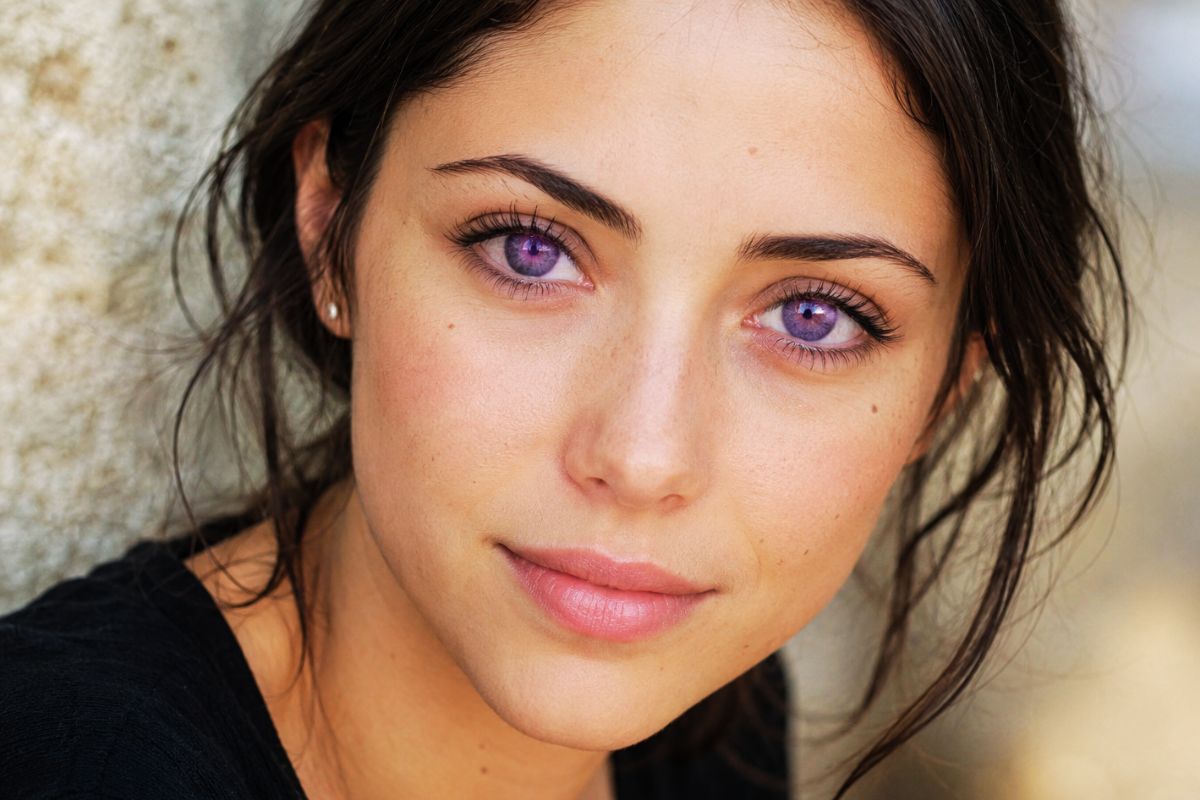
Verdict: True
Humans can naturally have violet eyes. Genuinely, yes. But rare doesn’t quite cover it here. Less than 1% of the global population, and it’s rarely a standalone trait. Albinism is usually the reason behind it. No hidden pigment, no mystery gene waiting to be found. Just very low melanin levels letting light scatter inside the iris in a way that looks violet to us.
- Violet eyes affect less than 1 percent of people worldwide, rarer than blue, green, or hazel eyes
- Most cases are linked to albinism, a condition affecting roughly 1 in 20,000 people.
- The violet effect comes from low melanin combined with red blood vessel reflection and blue light scattering, not a separate pigment.
- The viral “Alexandria’s Genesis” myth, which claims violet eyes signal a perfect mutation, has zero scientific basis.
So how does this actually happen? Eye colour all comes down to melanin, the same pigment behind hair and skin tone. More melanin sitting in the iris means darker eyes, and brown ends up being the most common result globally by a mile. Less melanin lets more light through and scatter around, which is basically why blue eyes exist at all, even though there’s no actual blue pigment sitting in anyone’s iris. Nobody’s eyes are really blue. They just look that way.
Also Read: Is the Jelly Caterpillar a Hoax or a Real Creature? Fact Check
Violet eyes take that same trick and push it further. When melanin drops low enough, light entering the eye scatters blue, a bit like why the sky looks blue on a clear day, while also picking up a reddish tint bouncing off blood vessels tucked at the back of the iris. Mix those, and you land on something that reads as violet or lavender to the eye. It’s your own biology doing a lighting trick on itself, essentially.
This is almost always tied back to albinism. People with albinism produce significantly less melanin throughout the body, including the eyes. Here’s the bit that trips people up though: most people with albinism actually end up with blue eyes, not red or violet ones like the stereotype suggests. Only a smaller group land on the exact melanin levels needed to tip into violet territory. Ocular albinism, which affects just the eyes rather than skin and hair as well, is one path that can lead there.
There’s more to the story though. Waardenburg syndrome is another one worth knowing; it shows up in roughly 1 in 40,000 people. What it actually does is mess with melanocytes, the cells whose whole job is producing melanin, so they don’t develop properly. End result, some people are left with pale or violet-tinted irises, usually paired with a few other physical traits that tend to come with the condition. Then there’s inflammation. Certain eye conditions can shift iris colour too, but that’s a completely separate mechanism from the genetic kind someone’s born with.
Also Read: 8 Science-Backed Advantages of Green Tea with Lemon for Daily Wellness
Now, the myths. Alexandria’s Genesis is probably the one you’ve seen doing the rounds, a supposed genetic mutation that apparently grants violet eyes, flawless skin, and basically turns someone into a walking perfect human. It’s entirely made up. The whole thing started as internet fan fiction back in the early 2000s and never quite died, still popping up every so often on TikTok and Reddit as if it’s settled medical fact. It’s not. No geneticist has ever found anything resembling evidence for it, because there isn’t any.
Elizabeth Taylor’s eyes are the other name that always comes up in this conversation, and it’s worth being straight about this rather than just repeating the legend everyone’s heard a hundred times. Snopes rated the claim that Taylor’s eyes were naturally violet as unproven, for what it’s worth. Most evidence points to her having a genuinely striking, unusually deep shade of blue that read as violet under particular lighting, wardrobe choices and makeup. She did have a real genetic mutation, but that one caused thick double eyelashes, not the eye colour everyone talks about.
So where does that leave us? Violet eyes are real. Not a filter trick, not internet fiction, not something that only exists in anime. But they’re also not the mystical superhuman marker the internet keeps insisting they are. What you’re actually looking at is a rare, specific mix of very low melanin and basic light physics, most often showing up alongside albinism, and it’s picked up a fair amount of nonsense mythology along the way that genuinely doesn’t survive five minutes of scrutiny.
Also Read: Does Sugar Actually Cause Hyperactivity in Children?
Frequently Asked Questions
Can violet eyes occur without albinism?
It’s uncommon, but yes. Conditions like Waardenburg syndrome or certain types of eye inflammation can also produce a violet or purple tint, though albinism remains the most frequent cause by far.
Is Alexandria’s Genesis real?
No. It’s an internet myth with no scientific backing, describing a fictional mutation that supposedly causes violet eyes and other exaggerated traits.
Did Elizabeth Taylor really have violet eyes?
It’s unproven. Most evidence points to her having naturally deep blue eyes that appeared violet under certain lighting and styling choices.
Sources and References
- Warby Parker – Is It Possible to Have Purple Eyes?
- All About Vision – Violet Eyes
- Vision Centre – Purple Eyes: Causes & Do They Really Exist?
- Snopes – Did Elizabeth Taylor Really Have Naturally Violet-Colored Eyes?
- Eyebuydirect – Can People Have Purple Eyes?