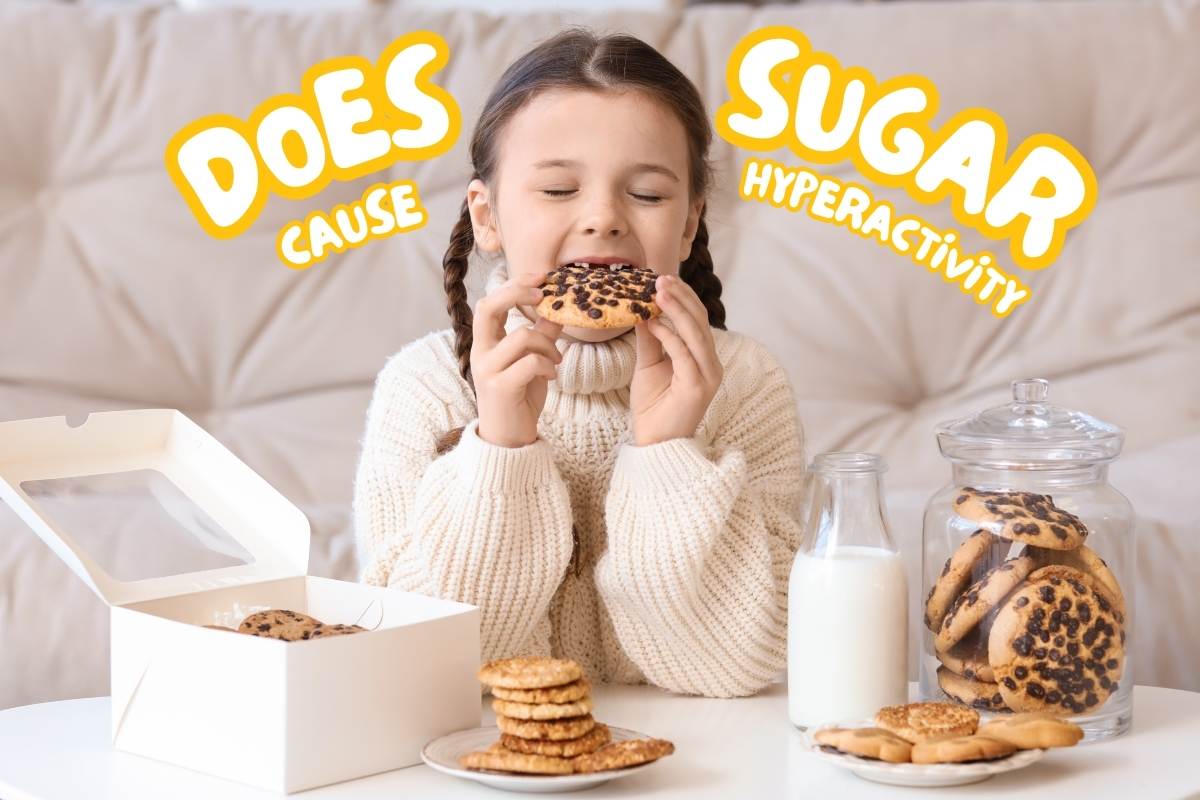
Ever find yourself at a kids’ birthday party feeling like you’re in the middle of a riot? Balloons bursting, twenty-six-year-olds shrieking at the top of their voices, and a cake that is mainly neon frosting that is devoured in seconds. Those same kids are literally vibrating 10 minutes later. They’re sprinting into walls. They’re “bouncing off the ceiling”. And pretty much every parent in the room nods and says, “Blimey, here comes the sugar rush.”
It feels so real. You can see it with your own eyes. It has become so ingrained in our parenting vernacular that we don’t even have to think about it. But here we are in mid-March 2026, and the difference between what we’re “seeing” and what’s really going on inside a child’s blood is humongous. For decades, scientists have been searching for this “rush.” They’ve fed kids glucose, studied their brain waves and observed them through two-way mirrors.
The results? Every single time, the data comes back blank. So, Does Sugar Actually Cause Hyperactivity in Children? It turns out, we’ve been blaming the cupcakes for something far more human and a lot more interesting.
The Party Effect: Why We Get It Wrong
The biggest reason we believe in the sugar rush is that we’re terrible at spotting “confounding variables”. Think about when kids get the most sugar. It’s at parties. It’s on holiday. It’s during a treat at a theme park. This is a high-octane, high-stress, high-excitement environment.
Look at it this way. If you took those exact twenty kids, put them in a quiet library and handed each of them a bowl of pure granulated sugar, they wouldn’t begin doing backflips off the bookshelves. They’d likely just have a little bit of an upset stomach. The “hyper” behaviour isn’t coming from the glucose; it’s coming from the adrenaline of being around friends and the sheer joy of the occasion.

A really telling study, often talked about in recent UK health reports from March 2026, showed just how much our own brains trick us. Researchers took a group of mums who swore their kids were sugar-sensitive. They told half the mums their kids had been given a massive sugary drink. The other half were told their kids got a sugar-free placebo. In reality? All the kids got the sugar-free drink.
The crazy part? The mums who thought their kids had sugar rated their behaviour as significantly more hyperactive. They even started acting differently—hovering more, telling the kids off more. We see what we expect to see. It’s a classic case of the placebo effect, just in reverse.
Also read: How Your Blood Type Can Affect Your Health
The 2026 Research: Is it the Sugar or the Process?
Now, just because sugar doesn’t cause a “rush” doesn’t mean it’s off the hook for behaviour entirely. The conversation in early 2026 has shifted away from the sugar bowl and toward Ultra-Processed Foods (UPFs).
A study published in JAMA Network Open just this month looked at the CHILD Cohort Study data. They found a link between kids who eat loads of UPFs—think fizzy drinks and ready-made snacks—and “externalising behaviours.” That’s scientist-speak for acting out and being aggressive.
But here’s the nuance. It isn’t necessarily the sugar. Kids who eat a lot of ultra-processed stuff often have other things going on. Maybe they’re getting less sleep. Maybe they’re spending five hours a day on a tablet. These things affect a child’s brain much more than a biscuit ever could. As a BMJ Study from January 2026 points out, the real danger of sugar isn’t a ten-minute sprint around the garden; it’s the long-term risk to their heart and teeth.
Also read: Do Collagen Supplements Actually Improve Skin Health or Is It Hype?
What About Kids With ADHD?
This is where things get a bit more serious. For the average kid, a sugar spike is handled by the body pretty easily. But for children with ADHD, the jury is still having a bit of a chat.
The NHS and other major British health bodies still say sugar doesn’t cause ADHD. That’s a firm fact. It’s a neurodevelopmental thing you’re born with. However, some 2025 reviews suggest that a massive blood sugar “spike and crash” might make the existing symptoms—like being restless or unable to focus—a bit more obvious for a short window.

It’s less of a “rush” and more of an “irritability spike.” If you’ve ever been “hangry,” you know the feeling. When your blood sugar drops after a big meal, you get grumpy and fidgety. In a child, that looks a lot like hyperactivity.
Why the Myth Won’t Die: The “Crash” Theory
Experts at the University of Nottingham have spent time looking at “Reactive Hypoglycaemia.” This is the real culprit behind the myth. When a kid eats a pile of refined sugar, their body overreacts and pumps out loads of insulin. Their blood sugar doesn’t just go back to normal; it craters.
This “crash” makes the kid shaky, sweaty, and incredibly irritable. Parents see the child acting up and assume the “sugar high” is still going. In reality, the child’s body is panicking because its fuel gauge just hit empty. They don’t need to be calmed down; they need a proper meal with some protein and fibre to steady the ship.
Also read: Facts Check: Does 5G Network Really Cause Health Problems?
Fact vs. Fiction: The 2026 Breakdown
| The Popular Myth | The Scientific Reality (2026) |
| “Sugar Rush” | It doesn’t exist. It’s a psychological “Expectancy Effect” in parents. |
| Party Frenzy | It’s caused by social excitement, loud music, and adrenaline. |
| ADHD Link | Sugar doesn’t cause ADHD, but the “crash” can make symptoms feel worse. |
| The Real Culprit | Artificial colours (the “Southampton Six”) are more likely to cause issues. |
FAQ: Your Quick Guide
Does sugar cause ADHD?
No. There is zero evidence for this. ADHD is about brain structure and chemistry, not what’s in the lunchbox.
If sugar doesn’t cause hyperactivity, why is my kid so wild at parties?
It’s the environment. Take away the cake but keep the bouncy castle and the loud music, and they’ll still be just as wild.
Are food additives to blame?
Actually, yes. In the UK, a handful of artificial colours (tartrazine, for example) must contain a warning that says they “may affect activity and attention in children”. If you’re worried about behaviour, don’t just check for sugar on the labels but also E-numbers.
Is sugar still bad for them?
Yes, but for different reasons. In early 2026, the World Health Organisation reaffirmed that sugar should be less than 5% of their daily energy. It’s about preventing obesity, type 2 diabetes, and tooth decay—not about keeping them from running around.
Also read: Facts Check: Can Home Remedies Really Cure Cancer?
The Fact-Check Verdict
VERDICT: FALSE. After a decades-long study and the most recent data from March 2026, we are quite sure: Does sugar actually cause hyperactivity in children? The answer is no: sugar does not affect a child’s behaviour or energy level in any measurable way. The “sugar rush” is a blend of holiday settings, a festive atmosphere, parental pressure, and the “crash” that follows when blood sugar plummets.
But, next time your little angel is acting like a tornado after attending a birthday party, don’t blame the chocolate fountain. Blame the three hours they just spent in a sweaty soft-play centre with thirty other toddlers. Any of us would be somewhat hyper after that, right?
So perhaps allow them the odd sugary treat, but be very aware of those food colourings and—especially—make sure they get a good night’s sleep. That’ll do more for their behaviour than any sugar ban ever will.
Sources and References
- The Week (9 March 2026): Fact Check: Does sugar affect children’s mood and behaviour? – A comprehensive review of the “expectancy effect” and the psychological triggers behind the sugar rush myth.
- JAMA Network Open (March 2026): Ultra-processed food intake and behavioural patterns in early childhood—findings from the CHILD Cohort Study linking UPFs to externalising behaviours in five-year-olds.
- BMJ Public Health (January 2026): Sugar exposure in the first 1,000 days and adult health outcomes – A landmark study on the long-term cardiovascular risks of early-life sugar consumption, regardless of immediate behavioural impact.
- Diabetes UK (12 March 2026): Ultra-processed foods in preschool years associated with behavioural difficulties – Clinical analysis of the connection between dietary quality and emotional regulation in toddlers.
- Food Standards Agency (FSA): Check the label: Artificial colours and hyperactivity – Official UK guidance on the “Southampton Six” additives and their required warning labels.
- World Health Organisation (Updated Feb 2026): Guideline: Sugars intake for adults and children – Global standards for free sugar consumption to prevent non-communicable diseases.
Recommended