Here’s the thing about Buckingham Palace that nobody actually tells you before you go. That famous front, the long flat stone face you’ve seen on every postcard and tea towel in London, wasn’t there until 1913. Aston Webb slapped it on just over a century ago. The building behind it has been knocked down, rebuilt, bombed, extended, and reinvented so many times across three centuries that almost nothing of the original 1703 townhouse is still standing. What you’re looking at from The Mall is essentially a greatest hits compilation of royal ambition and architectural second-guessing, layered on top of each other across 300 years. Genuinely fascinating once you know that.
- Originally a private townhouse built in 1703 for the Duke of Buckingham, not a royal home
- Queen Victoria was the first monarch to live there, moving in three weeks after becoming queen in 1837
- 775 rooms, 760 windows cleaned every six weeks, 1,514 doors, over 350 clocks wound weekly
- Nine German bombs hit the palace during World War Two; King George VI and Queen Elizabeth refused to leave
- King Charles and Queen Camilla confirmed in June 2026 they won’t move in after the £369 million refurbishment finishes in 2027
- State Rooms open to the public each summer, late July through September
How It Actually Became a Palace?
The land has a longer history than most people realise. Henry VIII had it in the 16th century. King James I tried to plant a mulberry garden on it to breed silkworms and picked the wrong variety entirely, so nothing came of it. Then in 1703, John Sheffield, the Duke of Buckingham, had a large townhouse built there. George III bought it off the Sheffield family in 1761 for his wife Queen Charlotte, paying £21,000 for it, which is roughly £3 million now. Bit of a bargain really.
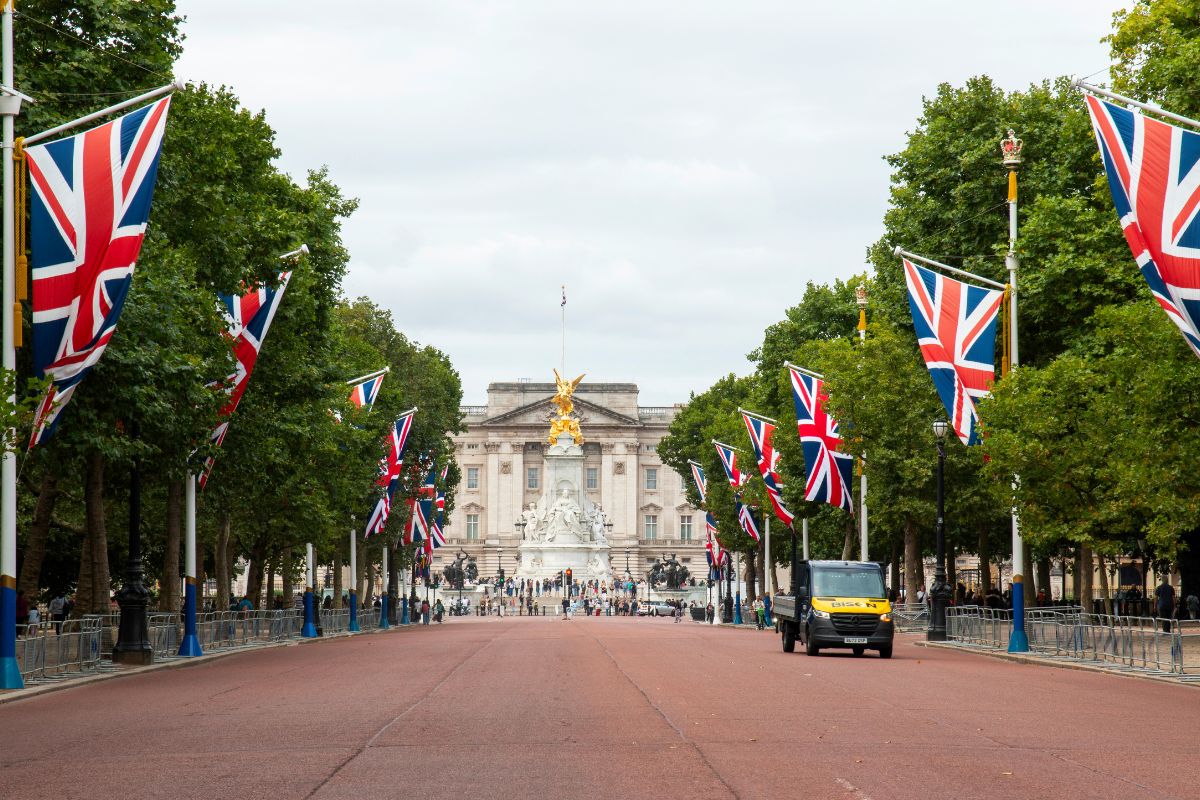
George IV was the one who decided it needed to be a proper palace. He hired John Nash, gave him a fairly unlimited brief, and Nash got to work in the 1820s redesigning the State Rooms and giving the whole thing a more palatial shape. George IV never actually got to live in it. Neither did William IV, who disliked the place enough that he genuinely offered it to Parliament after the Houses of Parliament burned down in 1834. Parliament said no. So it sat there until Queen Victoria moved in three weeks after her accession in 1837, becoming the first sovereign to actually call Buckingham Palace home. Every monarch after her did the same, right up until June 2026 when King Charles and Queen Camilla confirmed they’ll be staying at Clarence House instead once the current refurbishment wraps up.
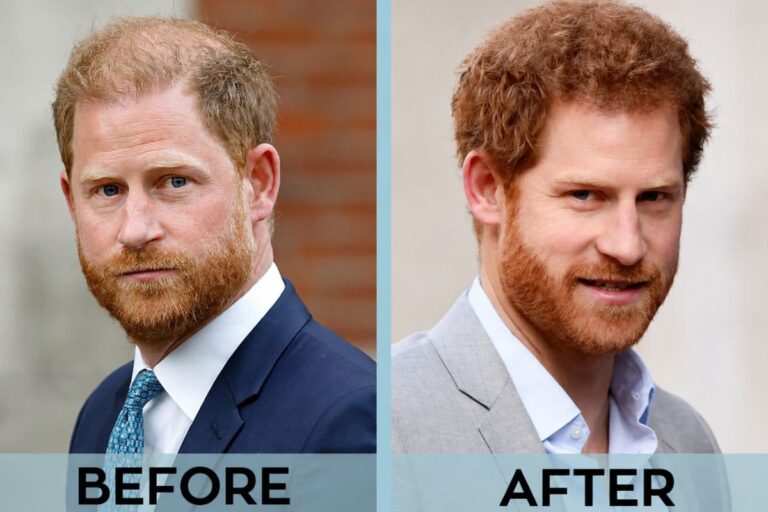
Also Read: Has Prince Harry Had a Hair Transplant?
The Numbers Behind Buckingham Palace
775 rooms. That’s the headline figure that gets quoted everywhere, but breaking it down is more interesting. 19 State Rooms for official events and ceremonies. 52 royal and guest bedrooms. 78 bathrooms. 188 bedrooms for staff. 92 offices. 760 windows, each one cleaned on a six-week rotation. 1,514 doors. Over 40,000 lightbulbs. More than 350 clocks and watches maintained by two dedicated conservators who wind them every week without fail. A swimming pool, a cinema, a post office, a chapel, a doctor’s surgery, and its own police station all within the same complex.
The gardens cover 39 acres and include a three-acre lake, a helipad, a tennis court, and over 350 species of wildflower. There are 30 recorded bird species in the grounds. In the middle of central London. Worth thinking about.
Also Read: Do British Royals Hold a Formal Role in Church of England Events?
What’s Inside the State Rooms?
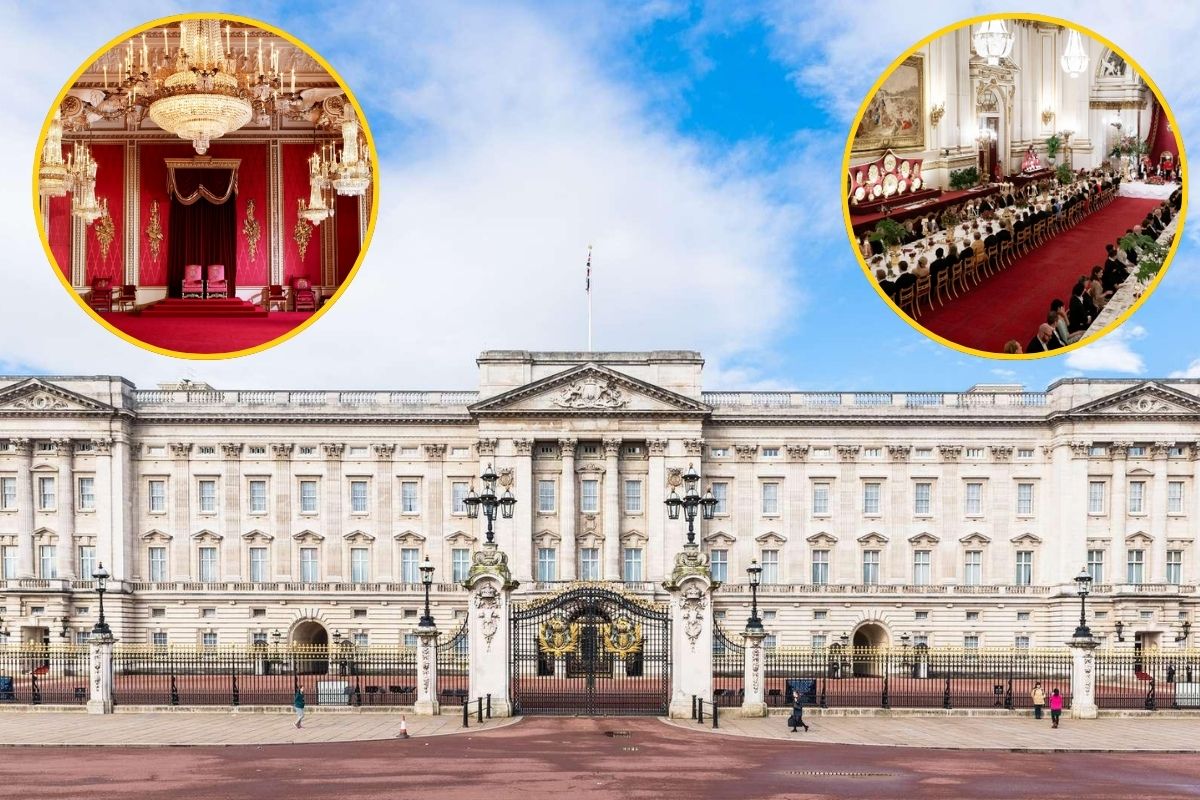
The State Rooms are the public face of the palace, and they’re genuinely worth the ticket price. The Throne Room holds the Chairs of Estate used at King Charles’s coronation in 2023. The Ballroom is the largest room in the building, 36.6 metres long, 18 metres wide, 13.5 metres high, used for state banquets. The White Drawing Room is where the royal family gathers before official occasions, with a secret door hidden behind a mirror and cabinet that the monarch uses to enter from private quarters, which is exactly the kind of detail that makes visiting Buckingham Palace worthwhile.
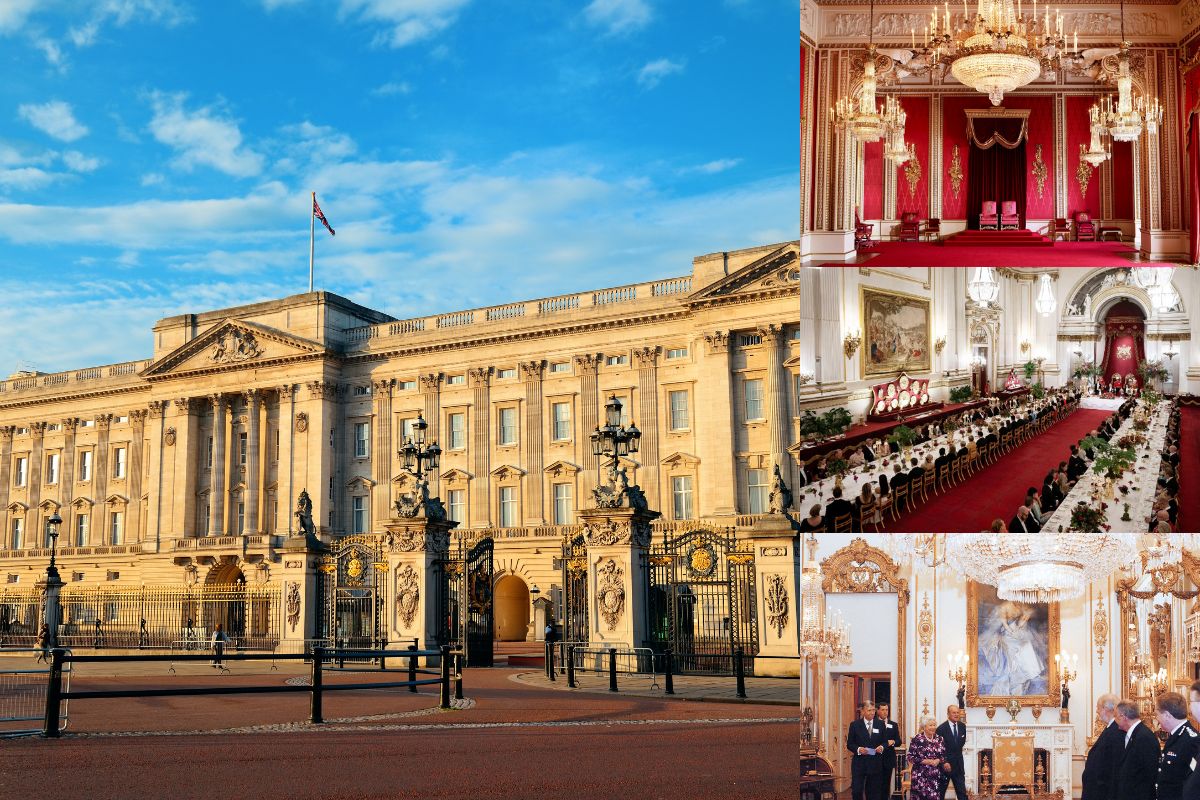
The art collection throughout is extraordinary. Works by Rembrandt, Vermeer, and Canaletto hang as part of the Royal Collection Trust, which also manages The King’s Gallery on the grounds, built on the site of the chapel the Blitz destroyed.
Also Read: The Real Story of Prince Harry and Meghan Markle’s Royal Exit
The War Years
Nine German bombs hit Buckingham Palace during the Blitz. The government advised King George VI and his wife to leave. They refused, choosing to stay while the East End of London was being flattened around them. The Queen Mother later said the bombing made it easier to face the people of the East End, since the palace had suffered alongside ordinary Londoners. The chapel took a direct hit and was only rebuilt as The King’s Gallery decades later.
The Flag Trick
One of the more satisfying small facts about visiting. When the Royal Standard flies above the palace, the King is inside. When the Union Jack is up instead, he’s somewhere else. Anyone standing outside on any given day can check in about two seconds whether the monarch is actually home.
Also Read: Facts Check on Queen Camilla’s Garrick Club Membership
What’s Happening Right Now?
The £369 million reservicing programme that’s been running since April 2017 is due to finish in April 2027. It’s funded through the Sovereign Grant and covers the kind of deep infrastructure work- pipes, electrics, heating systems- that hadn’t been properly tackled for decades. When it finishes, public access to the State Rooms will be expanded, with the palace being repositioned more explicitly as a national heritage asset now that the King and Queen won’t be living there.
State Rooms are open to visitors every summer, late July through late September. The Changing of the Guard runs on the forecourt at 10:45 am with the actual handover at 11 am. It’s free to watch, though arriving early for a decent spot is genuinely necessary.
FAQ
When was Buckingham Palace built?
The original Buckingham House was built in 1703. Architect John Nash transformed it into a palace from the 1820s onward. The famous East Front facade was added in 1913.
Who was the first monarch to live at Buckingham Palace?
Queen Victoria, who moved in three weeks after her accession in 1837.
How many rooms does Buckingham Palace have?
775, including 19 State Rooms, 52 royal and guest bedrooms, 78 bathrooms, and 188 staff bedrooms.
Is Buckingham Palace open to visitors?
Yes, the State Rooms open late July through late September each year. The King’s Gallery is open year-round.
Will King Charles live at Buckingham Palace?
No. Confirmed in June 2026, King Charles and Queen Camilla will remain at Clarence House after the refurbishment finishes in 2027.
What does the flag above the palace mean?
Royal Standard flying means the King is in residence. Union Jack means he isn’t.
Sources and References
- Britannica – Buckingham Palace History and Facts
- Things to Do in London – Buckingham Palace History Timeline 2026
- Tootbus – 50 Fascinating Facts About Buckingham Palace
- Golden Tours – Buckingham Palace Fascinating Facts
- London Tickets – 10 Fascinating Buckingham Palace Facts
- ABC News – King Charles III and Queen Camilla Not Moving Into Buckingham Palace
- NPR – King Charles III Will Not Live at Buckingham Palace After Refurbishment