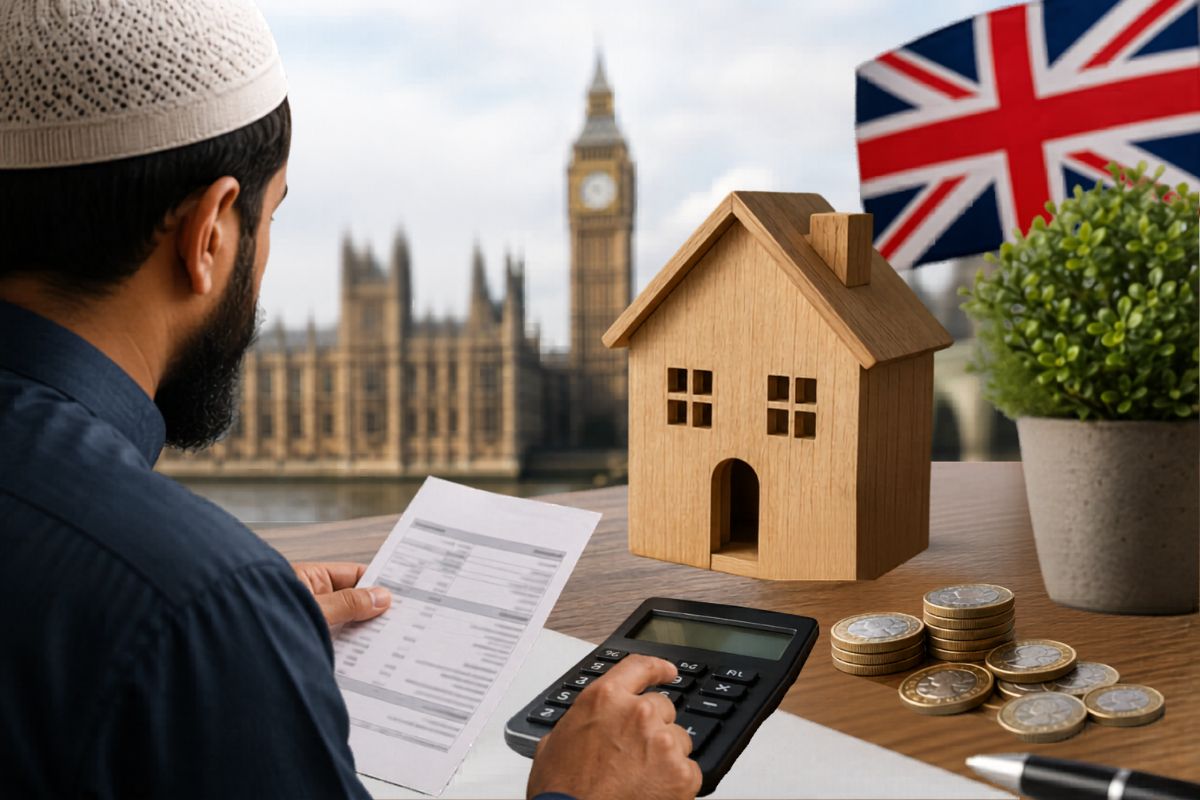
You have probably seen this one before. Someone shares a post claiming Muslims do not have to pay council tax if they use a room at home for prayer. It does the rounds on Facebook, pops up on X, gets copy-pasted into forums, and every time it resurfaces, it gets thousands of shares before anyone stops to check whether it is actually true. So is it? No. Here is what the law actually says.
- Muslims in the UK pay council tax the same way every other resident does, with no exceptions
- No faith group in the UK has a religious exemption from council tax
- The prayer room exemption claim has been investigated and shot down by Full Fact more than once, and the House of Commons Library has confirmed it has no legal basis
- The one narrow religion-related exemption that does exist covers people living in religious communities with no personal income at all, think monks or nuns in a convent, not Muslim families in a house
- Mosques do not pay business rates, but that is a completely separate thing from council tax on someone’s home
- Whatever band your property sits in, that is what you pay, Muslim or not
Where Did This Claim Actually Come From
It started with a petition. Back in 2013, someone submitted it to Parliament claiming Muslim households could avoid council tax by designating a room for prayer, and that this did not apply to people of other faiths. It was never government policy. It never became law. It was written by a private individual with no connection to Parliament, and it was flagged as misleading at the time it was submitted.
That petition is now over a decade old. The screenshot of it still gets shared today as if it were current news. It is not. It was not true when it was written, and nothing has changed since.
Despite being more than a decade old, this petition screenshot still circulates regularly. The claim has been spotted on Facebook and X in recent months, with versions suggesting Muslims avoid council tax by designating rooms as prayer spaces. It is not true; it has never been true.
Also read: Employers & Workers Asking: Will Minimum Wage Go Up in 2026?
What UK Law Actually Says
Council tax in the UK is a property-based charge levied by local authorities to fund public services. It is a legal obligation based on occupying a residential property, not on religion, belief, nationality, or personal background. There is no religious exemption from council tax for Muslims or for any other faith group.
The law does not consider religion when determining tax liability. Whether a person is Muslim, Christian, Hindu, Jewish, or of no faith, if they occupy a property that qualifies for council tax, they must pay it unless they meet the general exemption or reduction criteria.
The reductions and exemptions that do exist under council tax law are based on personal circumstances, not faith. Full-time students can be exempt. A single adult living alone gets a 25% discount. People with severe mental impairments may be disregarded for billing purposes. Empty properties may qualify for exemption in certain circumstances. None of these have anything to do with religion.
The only exemption related to religion set out in council tax law is for members of religious communities whose principal occupation consists of prayer, contemplation, education, or the relief of suffering, with no income or capital of their own and who are dependent on the community for their material needs. This is a narrow category that might include, for example, some nuns living in a convent. It does not apply to a Muslim family living in a house that uses a room for daily prayers. The lifestyle of the community is what qualifies for the exemption, not the faith of the individual.
The House of Commons Library has confirmed directly that claims about a prayer room exemption have no basis in council tax law.
Also read: Did Dominik Szoboszlai Deserve Liverpool’s 2025-26 Player of the Season Award?
How Much Do Muslims Pay in Council Tax in England?
How much Muslims pay in council tax in England is the same as what anyone else who lives in the same type of property in the same local authority area pays. In London, where over 1.3 million Muslims live, the average council tax bill for a Band D home in 2024/25 is £1,800. Muslims living in those homes pay just like everyone else – religion does not factor in.
The amount varies by local council and property band, running from Band A at the lowest end to Band H at the highest. The valuation bands in England are based on estimated property values from 1991. Your religion, ethnicity, or faith has no bearing on which band your property falls into or how much you owe.
Also read: Ghosts, Legends, and Haunted UK Castles Based on True Stories
What About Mosques?
As of 2026, there are around 1,800 mosques in the UK, according to the Muslim Council of Britain. All of them, as dedicated places of worship, are exempt from business rates and do not pay council tax. This is not unique to Muslims – there are also about 50,000 churches in the UK, all treated the same way for tax purposes.
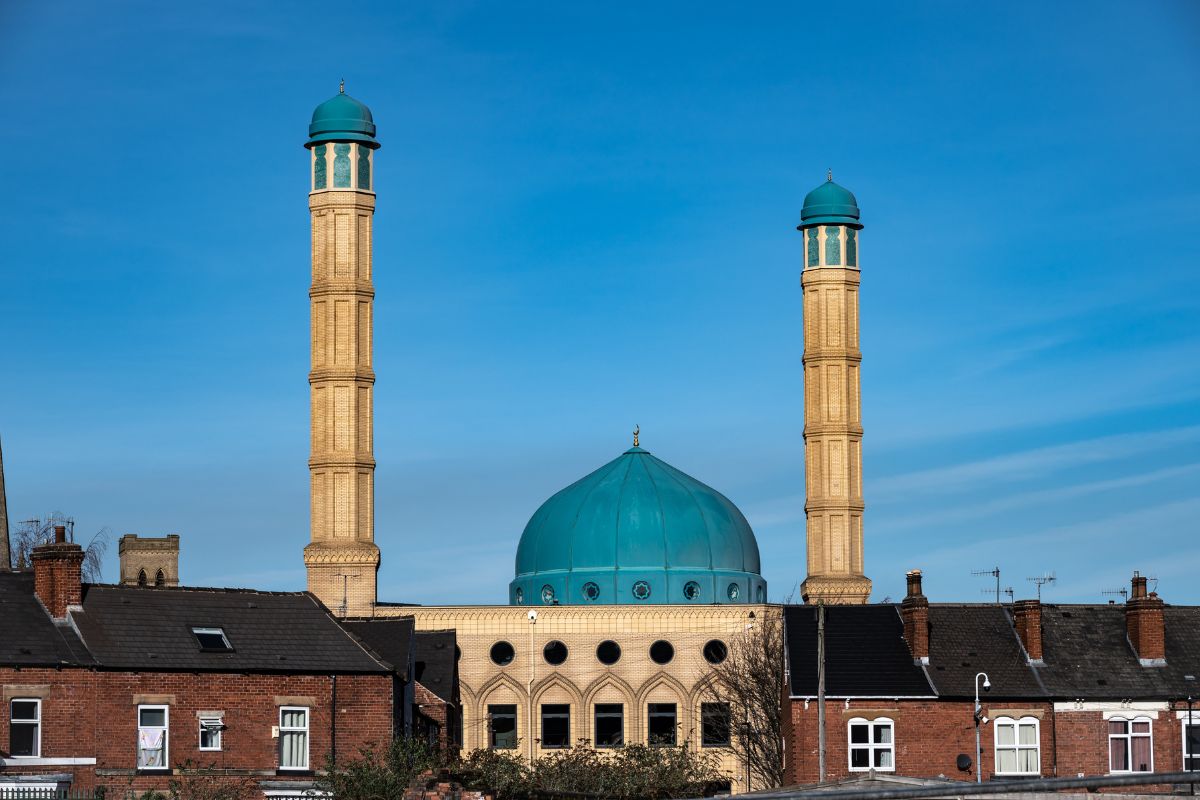
This is where the confusion sometimes comes from. Mosques, churches, synagogues, and temples are all exempt from business rates when they are officially registered as places of worship and primarily used for public religious purposes. That exemption applies to the building itself as a non-domestic property. It has nothing to do with the homes of Muslim residents, who pay council tax on their domestic properties the same as everyone else.
A mosque is not a home. A room in a family home set aside for prayer is not a mosque. The two are treated completely differently under UK law, and the distinction is based on how the property is used and classified, not on the faith of the people inside it.
Also read: Does the Max Launch Bring All HBO Shows to the UK?
Why This Myth Keeps Spreading
The claim is persistent partly because it mixes a real fact with a false one. Indeed, mosques do not pay council tax. It is completely false that Muslim homeowners are exempt from council tax because of their faith or because of how they use rooms in their home. Taking the first fact, misapplying it to private residences, and adding a religion-based angle is how a misleading narrative spreads and sticks for years.
Full Fact, one of the UK’s leading independent fact-checking organisations, has investigated and debunked this claim multiple times over the years. The verdict has not changed.
Also read: Facts Check: Is Global Warming Really Accelerating?
Final Verdict: FALSE
The claim that Muslims in the UK are exempt from paying council tax is false. There is no prayer room exemption in UK council tax law. There is no religious exemption for Muslims or for any other faith group that applies to domestic residential properties. Muslims in the UK pay council tax in the same way as every other resident, based on their property band and local authority area, with reductions available only based on personal circumstances, not religion. This claim has been debunked by Full Fact, confirmed false by the House of Commons Library, and contradicts the clear language of UK council tax legislation.
Sources and References
- Full Fact – Misleading claim about ‘council tax exemption’ for Muslims recirculates on Facebook
- Nation Cymru – Fact Check: Muslims and Council Tax
- London Business Mag – Do Muslims Pay Council Tax
- Towerstone Accountants – Do Muslims Pay Council Tax
- Pro Tax Accountant – Do Muslims Have to Pay Council Tax
- House of Commons Library – Council Tax Exemptions
- UK Government – Council Tax Exemptions Guidance
- Petition Parliament – Archived Parliament Petition 2013
- Church Times – Churches Outnumber Pubs in the UK
- AAP – Fact Check: Muslims Must Still Pay Council Tax