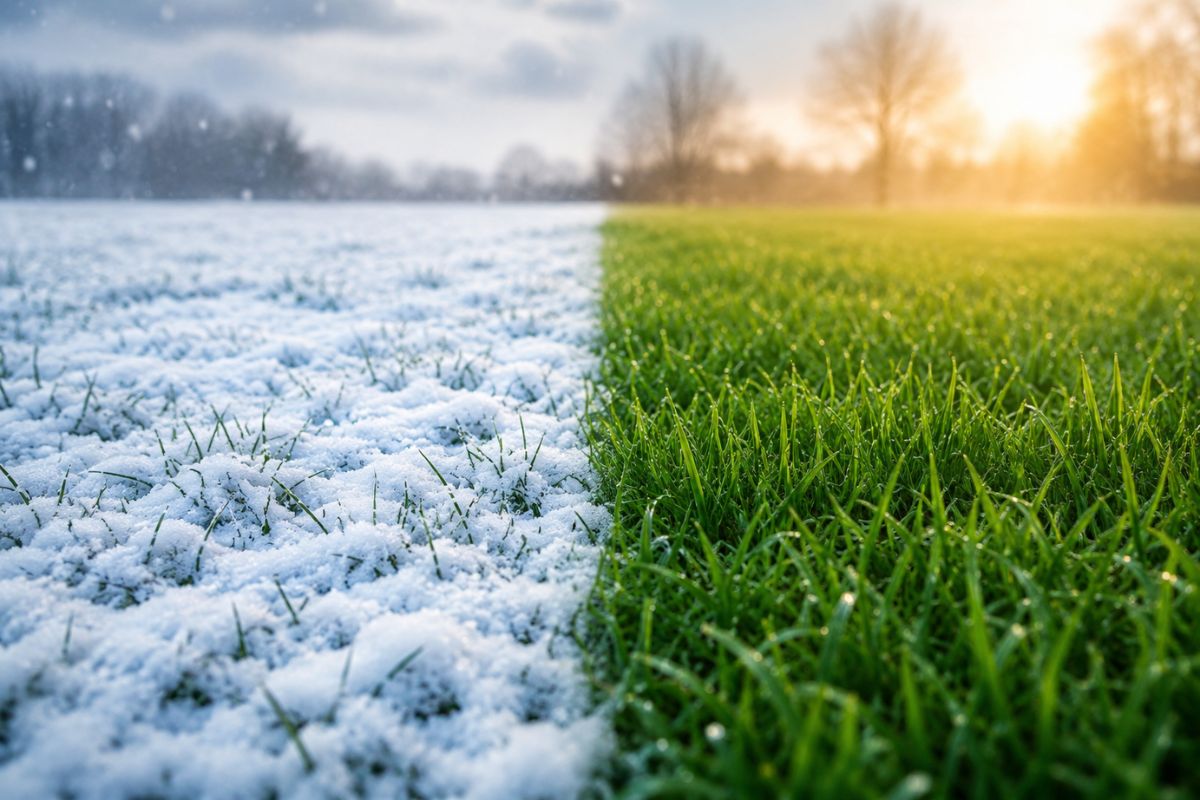
Quick Answer: So does grass grow in winter? Barely. Once the soil temperature drops below about 5–6°C, most UK lawns nod off and stop growing until spring. It’s not dead, though it rests and conserves energy.
Every winter your lawn goes flat and dull, and you start to wonder if it’s still ticking.
- UK lawns are cool-season grasses that slow right down in the cold.
- Growth pretty much stops once the soil falls below 5–6°C.
- Your grass is dormant, not dead, as the roots stay alive underground.
- It usually wakes up around March as the ground warms.
- Winter’s a poor time to sow or lay new grass.
- A high-potassium autumn feed sets it up for the cold.
What Happens to Grass Through Winter?
As the air cools, so does the soil, and growth slows to a crawl. When it gets cold enough, your grass goes dormant. The Grass People state that the grass hibernates like a hedgehog, saving energy until things warm up.
Up top, it looks tired and patchy. Below, the roots are still working. Cold isn’t the only reason, either; less sunlight and more damp make life hard through the darker months.
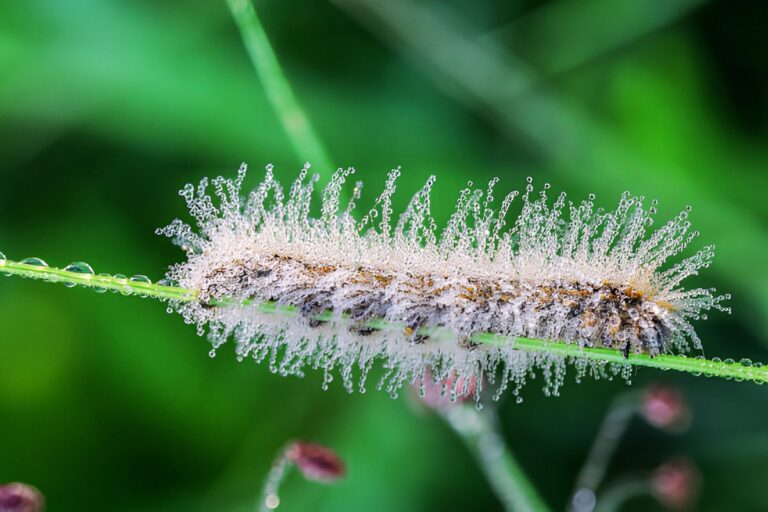
Also Read: Is the Jelly Caterpillar a Hoax or a Real Creature? Fact Check
The Temperature That Stops Growth
It’s soil temperature that matters, not the air. Most UK lawns need steady warmth of around 8–10°C to grow well. Drop below that and they slow; drop under roughly 5–6°C and they basically stop.
Bolton Turf reckons this stage usually starts in around late October or early November, though it shifts with where you live, how high up you are and what the weather’s doing. And frost? The fast track. One single overnight frost can send a healthy lawn straight into dormancy, stiffening the blades and shutting things down on the spot.
Does Grass Grow in Winter At All?
Depends where you are. In milder spots, winter doesn’t shut everything down. Compass Grass Machinery notes that many grasses go dormant below 4°C (40°F), but cool-season types like ryegrass and fescue keep ticking over slowly when it’s mild.
Warm-season grasses, by contrast, clock off completely to save energy. South-facing lawns and sheltered, town-centre spots hold warmth longer, so they grow a little later into autumn. Shaded corners and heavy clay stay cold and stop first.
A lawn can also look like it’s growing when soggy blades are just lifting and softening. If the height’s the same after a week and feels spongey, it’s not growing because it’s wet.
When Does Grass Start Growing Again?
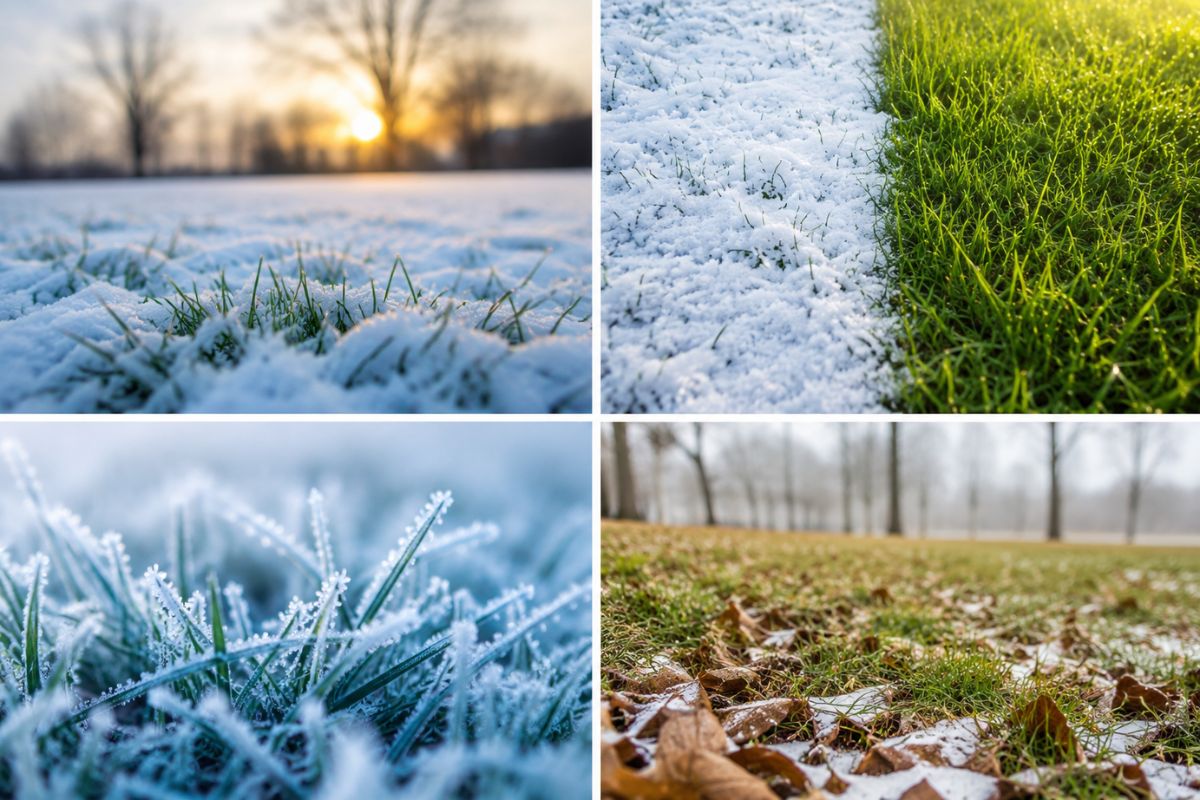
Once the soil creeps back above the threshold, your lawn stirs. That’s usually early to mid-March, and it picks up speed as spring goes on. The first signs are small blades, thicker patches, and a richer green. Go easy on the first cut. Keep the blade high so you don’t scalp it.
Also Read: Why Do Spiders Run Towards You? It’s Not What TikTok Said?
Can You Sow or Lay Grass in Winter?
Short version: don’t. Winter’s the dormant season, so new grass struggles. Early autumn is the best time. Seed goes down well in September or October. Kevin Gess of Prestige Lawns explains, ‘Generally speaking, early autumn is the optimum time to plant grass seeds since the soil is at the perfect temperature for germination and establishment before winter.’
Spring’s a solid second choice. Ionel Giuran of Fantastic Gardeners says, ‘The best times to sow grass seeds are during the cooler months of early fall or early spring’.
Why does winter flop? Steve Chilton of LeisureBench sums it up: ‘Winter is the dormant season for grass, with the likes of frost, the frozen ground, minimal light and cold temperatures being too extreme to allow grass to grow properly’.
Ideal Home warns that sowing in the cold gives slower, patchier germination. If you’re set on it, use a hardy, cold-tolerant seed in late winter or early spring and never sow with frost on the forecast. Laying turf is kinder. You can lay it as late as November, as long as the ground isn’t frozen or waterlogged and the turf’s hardy. Just expect slow rooting.
How to Care For Your Lawn in Winter
Good news is that there’s not much to do. Feed it in autumn with a potassium-rich fertiliser to toughen it against winter diseases. Feed twice a year, in fact, once in spring for growth and once in autumn for resilience.
Winter feeds come in a few forms: slow-release for season-long cover, a quick-release six-week boost, a fast-acting liquid, or a feed-and-moss-control combo. After that, keep off frozen grass, or you’ll leave brown footprints. Clear the leaves so light and air get through, and stay off wet, soft turf so you don’t compact the soil.
Snow isn’t the enemy — it acts as a blanket and shields the blades from harsh frost. By December the lawn’s asleep, so no mowing or feeding. Get your mower serviced for spring instead. The Met Office even reports our growing season is now at least a month longer than it was decades ago.
When Should You Stop Cutting the Grass?
Aim to get your last mow done before the real cold lands, usually by early November. The Lawn Association recommends leaving grass around 5 cm (2 inches) over winter to insulate the roots. Only mow when it’s dry and frost-free, on a higher setting than usual, and stick to the one-third rule — never take off more than a third at once.
If you cut in a mild spell, clear the clippings so sunlight reaches the grass, and skip the mulching mower. It’s better to stop mowing a week too early than a week too late.
Final Word
So, the debate settled: grass doesn’t really grow in winter; it just waits. Feed it in autumn and keep off it during the frost. Come March, it shakes off the cold and greens up, just like before.
Also Read: Fact Check: Do You Lose Most Body Heat Through Your Head?
Frequently Asked Questions
Does grass grow in winter in the UK?
Ans: Barely. Most lawns go dormant once soil drops below 5–6°C. You’ll only see slow, patchy growth in mild spells or south-facing spots.
At what temperature does grass stop growing?
Ans: It slows below about 8°C and stops once the soil falls under 5–6°C. A hard frost can shut it down overnight.
Is my grass dead or just dormant?
Ans: Almost always dormant. It looks brown and dull, but the roots are alive and it greens up in spring.
When does grass start growing again after winter?
Ans: Usually early to mid-March, once the soil warms and days lengthen. It then speeds up through spring and into summer.
Should I cut my grass in winter?
Ans: Only now and then, and only when it’s dry and frost-free. Keep it near 5 cm; never mow frozen or soggy turf.
Can you lay turf in winter?
Ans: Yes, up to November, as long as the ground isn’t frozen or waterlogged. Expect slower rooting than in autumn or spring.
Sources & References:
- Compass Garden Machinery – Many grasses go dormant below 4°C (40°F), but cool-season types like ryegrass and fescue continue to grow slowly when it’s mild.