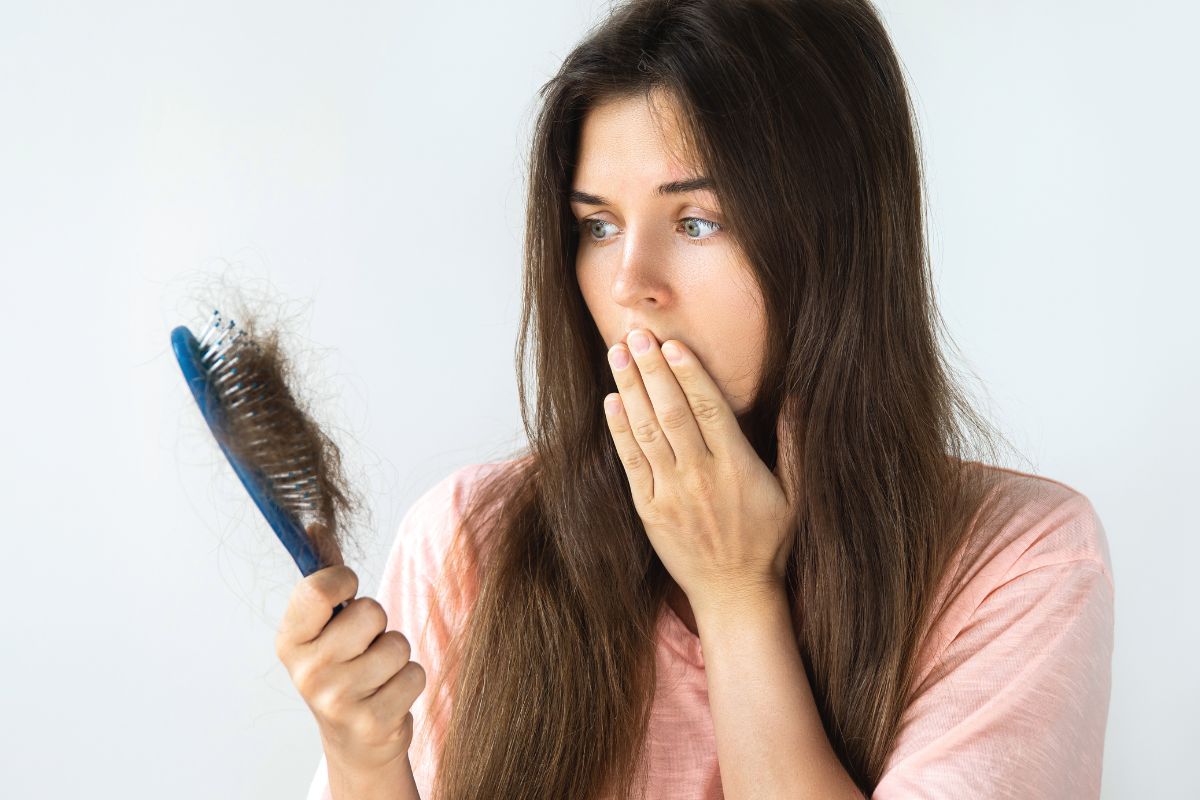
You wake up, and there’s more hair on your pillow than usual. Or you run your fingers through your hair in the shower and what comes away makes your stomach drop. The immediate question most people land on is stress, and it’s a reasonable one. But the follow-up question, can stress cause hair loss overnight, has a more complicated answer than most articles on this subject bother to give.
The short version: stress can absolutely cause hair loss. It cannot do it overnight. The biology of hair shedding under stress means the shedding you’re noticing today is almost certainly connected to something that happened weeks or months ago, not last night.
- It takes months, not hours. Stress-related hair loss just doesn’t happen overnight
- Telogen effluvium is the most common form, and it typically kicks in 2 to 4 months after the stressful period ends
- When cortisol stays elevated too long, follicles shift into a resting phase, which means the shedding you see later is a delayed response
- Stress connects to three hair loss types: telogen effluvium, alopecia areata, and trichotillomania
- The good part? It’s usually reversible once you tackle whatever’s causing the stress
- Shedding 50 to 100 hairs daily is completely normal; don’t panic over that number
- Stress isn’t always to blame for hair loss, but it can definitely make shedding worse
- That built-in delay is exactly why so many people can’t connect their hair loss to the stress that actually caused it
- Noticing patchy loss alongside the general shedding? That’s a GP visit, not a guessing game
Why Stress and Hair Loss Feel Connected
The connection between stress and hair loss is real and well-established. What trips people up is the timeline. Hair loss from stress typically appears 2 to 4 months after stressful events, which means that when you’re standing in the cold shower watching your hair come out in larger-than-usual quantities, what you’re actually seeing is the biological consequence of something your body went through months ago. The job loss. The bereavement. The weeks of broken sleep. The illness. Your body registered the stress at the time, made internal adjustments to prioritise its resources, and the hair is only now showing the evidence.
When you’re stressed, your body pumps out more cortisol as part of that fight-or-flight response. And this hormone doesn’t just affect your mood or heart rate. It reaches your hair too. Growing hair actually takes a lot of energy. So when your body’s dealing with sustained stress, it starts cutting corners. Hair growth isn’t essential for survival, so it’s one of the first things to get deprioritised while your system handles whatever it thinks is more urgent.
Also Read: 8 Science-Backed Advantages of Green Tea with Lemon for Daily Wellness
The Three Types of Stress-Related Hair Loss
Knowing which type you’re dealing with actually matters. Each one has a different cause, a different timeline, and a different way of bouncing back.
1. Telogen Effluvium
Telogen effluvium is the one most people run into. A big chunk of your hair follicles get pushed into a resting phase all at once. That resting phase drags on for a few months, which is why you won’t notice the shedding until three or four months after whatever stressed you out. So here’s the thing. You’re not shedding hair right when you’re stressed. You’re setting hair up to fall out later. It usually shows up as thinning spread across the whole scalp, not patches, and it tends to sort itself out once the stress is gone and your body settles back down.
2. Alopecia Areata
Alopecia areata is a different beast entirely. This is your immune system attacking your own hair follicles by mistake, which leaves round bald patches on your scalp or elsewhere on your body. It’s an autoimmune condition at its core, but stress, whether physical or psychological, is known to set it off or make it worse. It’s harder to predict than telogen effluvium. About half of mild cases grow back on their own within a year, though treatment can speed things along. If you spot circular bald patches, it’s worth getting a GP referral to a dermatologist.
3. Trichotillomania
Last up is Trichotillomania, and it works nothing like the other two. It’s the compulsion to pull your own hair out, whether that’s your scalp, eyebrows, or somewhere else, and it’s classified as a body-focused repetitive behaviour tied to anxiety in most cases. This isn’t something a dermatologist treats; it needs psychological support. Catch it early on, though, and the follicles typically recover.
Also Read: The Real Benefits Of White Tea And Why People Are Switching To It
So What About Overnight Hair Loss?
This question comes up all the time. Can you actually go to bed with a full head of hair and wake up noticeably balder? Let’s be honest here. Stress, whether it’s emotional or from an illness, can definitely throw off your hair growth cycle. But the shedding it causes takes months to show up. That delay is just how the biology works; there’s no way around it. So waking up with less hair overnight because of stress? That’s not something that actually happens.
What can happen faster is alopecia areata creating a patch you didn’t notice before, but even that takes days or weeks to develop, not a single night. There’s also this thing called canities subita, where hair seems to turn grey overnight after extreme acute stress. It’s shown up in historical case studies and got explored in a 2022 paper in the journal Immunity. But that’s about losing pigment, not losing hair, and it works through a completely different process.
Honestly, if it felt like your hair changed overnight, it probably didn’t happen that fast at all. It was likely creeping up on you for a while, and you just clocked it all in one go. Could’ve been the lighting that day, could’ve been right after you washed it, or maybe something just made you actually stop and look properly for once.
What Actually Helps?
Good news – managing stress properly can genuinely help your hair grow back, and there are a few different routes worth exploring. The most important one is dealing with the actual stress, not just slapping on treatments while the root cause keeps running in the background. You can use every product on the shelf, but if the stress is still there, you won’t get results that stick.
Minoxidil’s available over the counter in the UK and can help with regrowth if you’re dealing with telogen effluvium. Worth a chat with your pharmacist or GP before you start. For alopecia areata, corticosteroids come up as one of the options doctors sometimes suggest. Either way, chronic stress keeps pushing your follicles into that resting phase, which leads to shedding, but the encouraging part is it’s usually reversible once you get on top of things.
Here’s something people miss though. Nutrient deficiencies can make stress-related hair loss even worse. Iron deficiency especially gets overlooked a lot, and it’s a pretty common cause of excessive shedding in women here in the UK. It can also be happening alongside your stress, not necessarily because of it. So genuinely, get bloodwork done. Rule out thyroid issues, iron deficiency, and other medical stuff before you pin it all on stress. There’s a long list of things that can cause hair loss beyond just stress, so don’t jump to conclusions too fast.
Sleep, nutrition, and addressing the psychological source of the stress through therapy, exercise, or both are the non-medical interventions that matter. None of them produce results in days. All of them matter more than which shampoo you use.
Also Read: Are Crumpets Healthy for Weight Loss or Getting a Bad Rap?
When to See a GP?
If you’re seeing patchy bald spots rather than all-over thinning, or the shedding’s been heavy and won’t let up for more than two or three months, get it checked. Same goes if you’re noticing other stuff alongside it, tiredness that won’t shift, weight changes, skin issues. Book an appointment. Hair loss isn’t always just about the hair. Sometimes it’s your body waving a flag about something bigger going on underneath.
Frequently Asked Questions
Can stress really cause hair loss?
It can, genuinely. Stress forces follicles into resting mode, and shedding follows from there. Backed by real research, not just something people say. One thing it won’t do though, is cause hair loss overnight.
How long after stress does hair loss start?
Somewhere around 2 to 4 months out. All down to how follicles handle cortisol and the knock-on effect on their growth cycle.
Can you lose hair overnight from stress?
Not a chance. Weeks to months always sit between the stress itself and when shedding shows up. If it felt instant, it wasn’t; something was already in motion before you clocked it.
What does stress-related hair loss look like?
Most common is telogen effluvium, even thinning spread across your scalp, not patchy at all. Alopecia areata goes the other way, round bald patches. Both look nothing like pattern baldness.
Is stress-related hair loss permanent?
Mostly no. Telogen effluvium corrects itself once you’re past the stress and your body’s had time to recover. Alopecia areata’s less certain, but roughly half of mild cases regrow naturally within a year.
What should I do if I’m losing hair from stress?
Sort the stress out; that comes first. Get bloodwork to check thyroid and iron levels. If it’s severe, patchy, or lingering beyond two or three months, book a GP visit. Minoxidil, available over the counter in the UK, can help too.
Can stress make existing hair loss worse?
Definitely can. If pattern hair loss already runs in your genes, stress adds fuel to that fire.
Should I be worried if I’m losing more hair than usual?
Not automatically, no. 50 to 100 strands daily is standard for anyone. A bit more during stressful stretches is common and usually passes. Sudden patches or shedding sticking around for months, though- that’s worth a GP chat.
Sources and References
- Cleveland Clinic – Can Stress Cause Hair Loss?
- Mayo Clinic – Stress and Hair Loss: Are They Related?
- NIH – How Stress Causes Hair Loss
- Medical News Today – Can Stress Cause Hair Loss?
- University of Miami Health – Stress-Induced Hair Loss: It Can Happen
- Doctronic – Does Stress Cause Hair Loss? 2026
- MDhair – Does Stress Cause Hair Loss? 2026 Update
- Advanced Hair Restoration – Can Stress Cause Hair Loss?
- ScienceDirect – Impact of Perceived Stress on the Hair Follicle, Immunity 2022