Short answer? Yes. If you’ve been asking, ‘Will minimum wage go up in 2026?’, you can stop wondering. The new rates landed on 1st April 2026, and roughly 2.7 million workers woke up to a bigger pay packet.
The National Living Wage now sits at £12.71 an hour for anyone aged 21 or over. And these minimum wage 2026 UK rates count wherever you are in the country.
- The National Living Wage went up to £12.71 an hour, a 50p rise.
- 18 to 20-year-olds now get £10.85 an hour, up 85p.
- 16 and 17-year-olds and apprentices both jumped to £8.00.
- Work full time on the adult rate and you’ll clear about £24,784.50 a year.
- It’s still below the voluntary real living wage, though.
Will Minimum Wage Go Up in 2026? Here are the Numbers
The rates come from the Low Pay Commission (LPC), the independent group that tells the government what to do here. The report of GOV UK shows the adult rate climbed 4.1 per cent to land on £12.71.
| Rate | April 2025 | April 2026 | Increase |
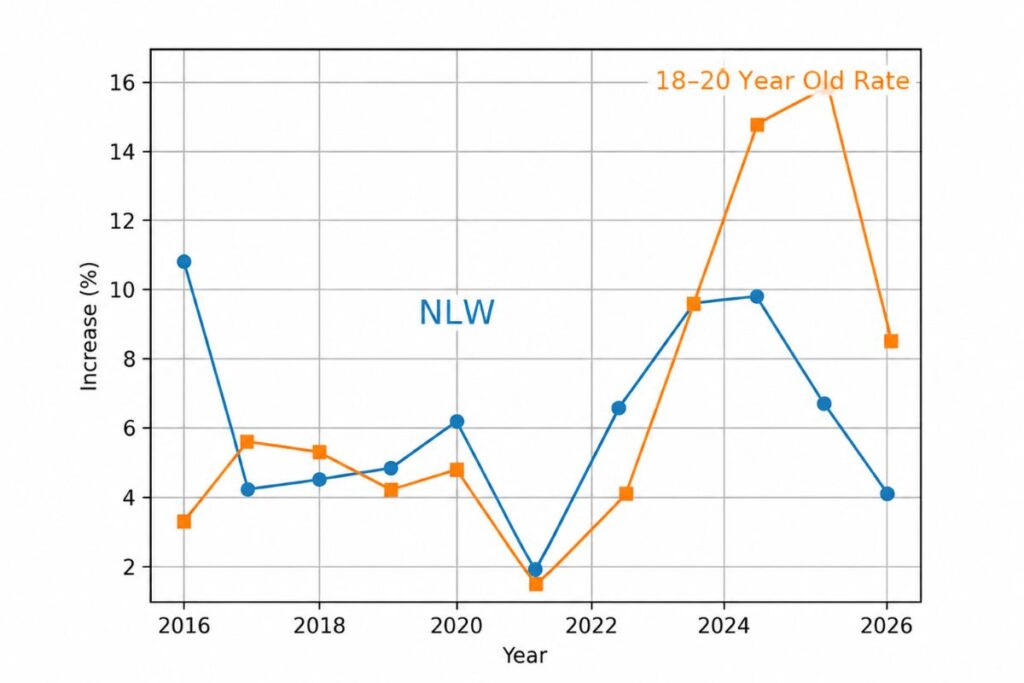
| 21 and over (NLW) | £12.21 | £12.71 | +4.1% |
| 18 to 20 | £10.00 | £10.85 | +8.5% |
| Under 18 | £7.55 | £8.00 | +6.0% |
| Apprentice | £7.55 | £8.00 | +6.0% |
That younger band is now worth 85 per cent of the adult rate. The plan is to bin it altogether one day so everyone over a certain age earns the same.
What It Actually Means For Your Wages
Work 37.5 hours a week on the new adult rate and you’re looking at £24,784.50 a year — £900 more than before. The BBC has crunched the 18-20 rate too, and that one’s worth roughly £1,500 extra a year for a full-timer.
Here’s the bit that matters most, though: it should leave you better off, not just on paper. The LPC reckons the rise stays ahead of rising costs. CPI is only tipped to climb 1.8 to 2.0 per cent this year, so the pay rise outpaces it. Zoom out and the adult minimum is now worth more than 75 per cent above what it was back in 2009.
Also Read: Did the UK Actually Start a 4-Day Work Week? Here’s the Ground Reality
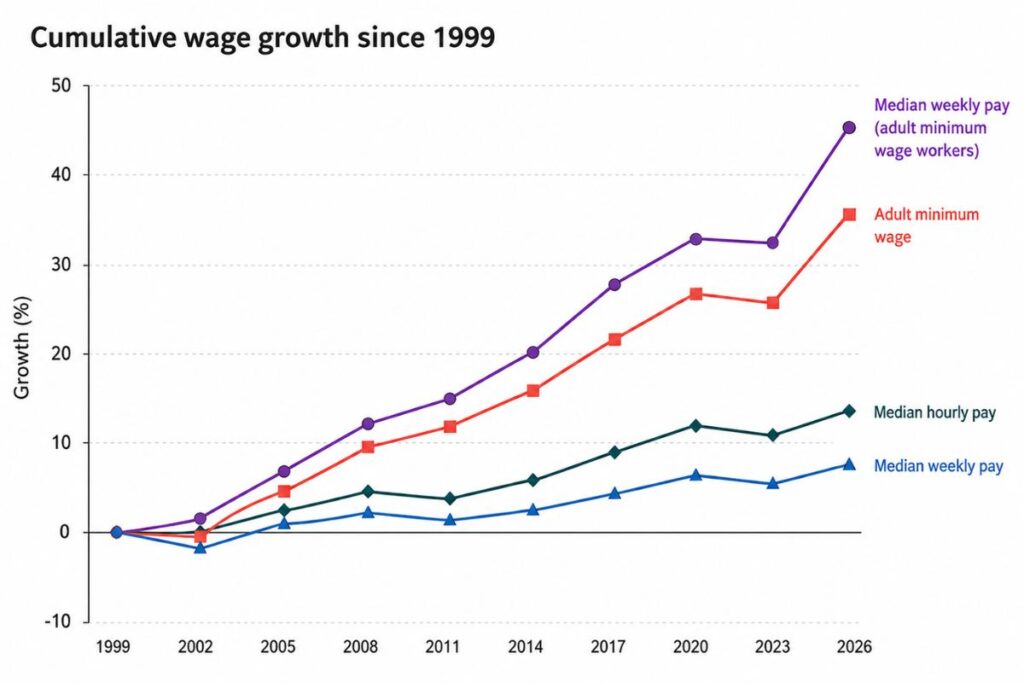
Cumulative real growth in hourly and weekly pay, 1999–2026
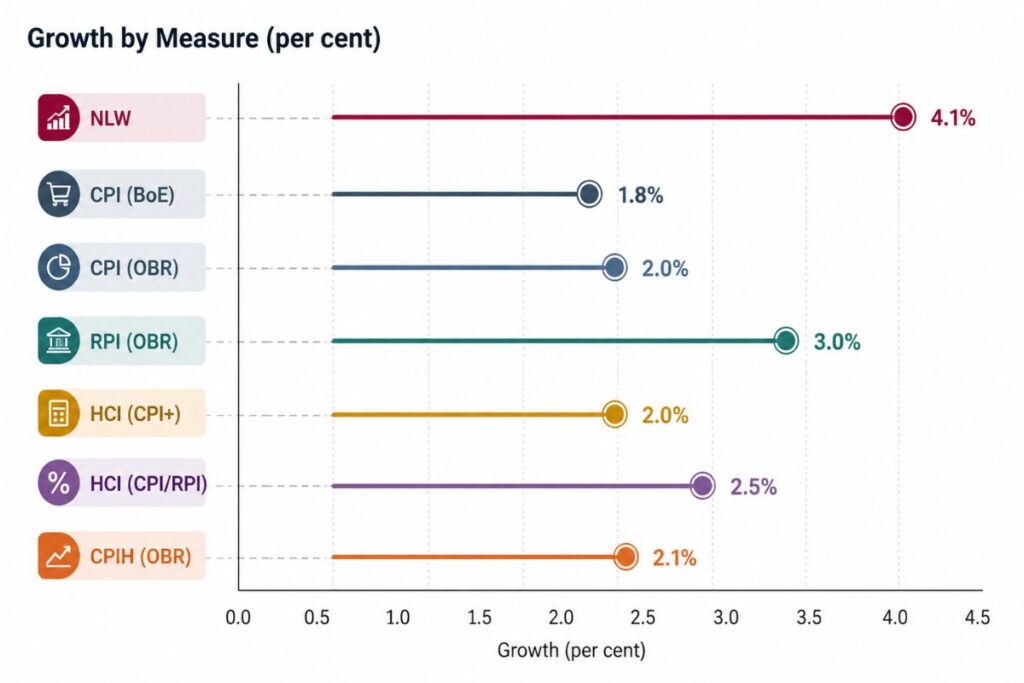
Projected growth in price indexes and the NLW, March 2026 to March 2027
The Living Wage is Still Higher
A pay rise is a pay rise, but campaigners say it doesn’t go far enough. The Living Wage Foundation has been clear that the legal minimum still leaves the lowest paid scraping by.
Their real living wage is the only rate worked out from what life actually costs. Right now it’s £13.45 across the UK and £14.80 in London. A full-timer on the government rate earns £1,443 less a year than that.
In London? The gap balloons to £4,076. And there are 4.4 million jobs — one in seven — paying below the real living wage. Over 16,000 employers pay it anyway because they want to.
Katherine Chapman, Executive Director of the Living Wage Foundation, said, “The rise to the minimum wage is a welcome boost for low-paid workers who have been hit hardest by years of high prices. It still falls short of the voluntary real Living Wage, the only UK pay body wage rate independently calculated based on the cost of living, currently £13.45 across the UK and £14.80 in London.”
Their research also reckons lifting half of those 4.4 million workers onto the real Living Wage would pump £1.6 billion back into the economy.
Also Read: Does the Max Launch Bring All HBO Shows to the UK?
Employers Will Also Be Affected
If you run a business, the bill keeps creeping up year on year. Employment law specialists are flagging pay compression — basically, the gap between your minimum wage staff and your skilled or supervisory lot keeps shrinking.
A full-timer on the minimum now earns close to £25,000, which is not far from the median UK salary of around £39,000. And when the bottom rate jumps, your higher earners tend to come asking for theirs too.
Don’t assume you’re fine just because you divide pay by hours—it’s rarely that simple. The rules shift depending on whether work is salaried, time-based, output-based or unmeasured. Trip up on working time, deductions or salary sacrifice and you can quietly slide below the legal floor.
And getting it wrong stings. Back in March 2026, the government named 389 employers fined around £12.6m for underpaying staff. They also have to hand back £7.3m to roughly 60,000 workers. Costa Coffee, Hays Travel, and Norwich City Football Club all made the list.
Growth in the NLW compared with inflation measures, per cent
A New Watchdog is Coming
There’s a new watchdog too. The Fair Work Agency is set to launch in April 2026, pulling enforcement of minimum wage, holiday pay, and statutory sick pay under one roof. Translation for employers: now is not the year to get sloppy.
What About 2027?
Next year’s already on the radar. The LPC still uses two-thirds of median hourly earnings as its benchmark, and it’s pencilling in a 2027 adult rate somewhere between £13.02 and £13.34 — with £13.18 the best guess.
According to Capital Law, it can rise anywhere from 2.4 to 5.0 per cent. Nothing’s set in stone, mind, and the figure could move as the economy shifts.
Also Read: Are AI-Generated Websites Ranking on Google? What the Data Shows
Final Verdict
True. Minimum wage went up across the UK on 1 April 2026, full stop. The adult National Living Wage rose to £12.71, with even chunkier percentage rises for younger workers and apprentices. Official Low Pay Commission figures back it up, and every source tells the same story. No doubt about it — pay rates climbed this year.
Sources & References:
- GOV UK – The adult rate has increased 4.1% to land on £12.71.
- BBC – The average minimum wage of a full-time worker who works 37.5 hours a week is £24,784.50.
- Living Wage Foundation – The rise to the minimum wage is a welcome boost for low-paid workers.
- Capital Law – Minimum Wage can rise from 2.4 to 5.0 per cent in 2027.