Verdict: Misleading
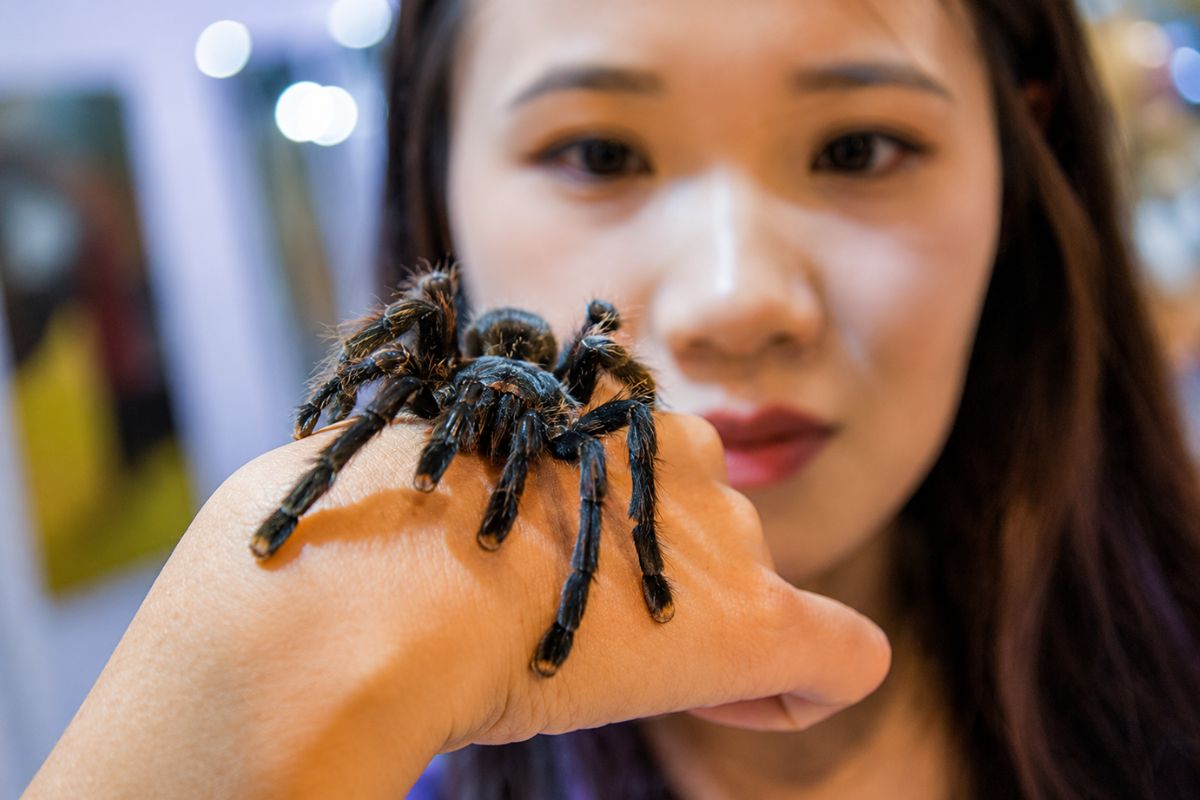
You spot a spider. It clocks you. Then it does the one thing that makes everything ten times worse. It runs straight at you. Every instinct you have reads that as a threat. The reality is considerably less dramatic, and considerably more about the spider’s own fear than anything to do with you.
- The claim that spiders run toward humans for protection comes from a viral TikTok video posted in February 2025 and has been directly debunked by spider researchers
- Sebastian Echeverri, a spider scientist who spoke to Snopes, said: “This would be like humans running towards something like Godzilla”
- Most spiders see very poorly and navigate through vibration and shadow rather than visual tracking
- A spider running toward you is almost always heading for the shadow you’re casting or the dark space behind you
- Spider brains have only a few hundred thousand neurons, nowhere near enough for complex behaviour like seeking protection from a larger animal
- Research in Current Biology found spiders respond to threats in 119 milliseconds through a pure reflex circuit, not conscious thought
- Wolf spiders get blamed for this most often because they’re fast, ground-level, and large enough to be alarming
Where Did This Claim Come From section?
In February 2025, a TikTok video racked up over 1.2 million likes suggesting that when a spider runs at you, it’s because it’s frightened and sees you as a source of safety. The original creator wrote in the caption that the clip was for entertainment purposes only. Didn’t matter. The idea had already spread too far to be pulled back.
By 2026, it had become one of those things a significant chunk of the UK population half-believes, the kind of factoid that gets shared in group chats alongside “actually did you know” as a prefix. It circulates on Reddit, in Facebook groups, in pub conversations. It is not accurate, and the explanation for why not is genuinely more interesting than the myth.
Also Read: Fact Check: Do You Lose Most Body Heat Through Your Head?
Why Do Spiders Run Towards You? The Real Science
When a spider appears to be charging at you, the immediate reading is intentional. It saw you. It made a decision. It’s coming over. None of that is likely to be true.

Vision first. Most spiders have six or eight eyes and genuinely terrible eyesight by human standards. The Australian Museum is straightforward about this, noting that few spiders have good eyesight and that most use touch, vibration, and taste stimuli to get around rather than visual navigation. A house spider sitting across a room cannot identify you as a target. What it can detect is the shadow you’re throwing across the floor, the vibrations coming up through the floorboards when you move, and sudden changes in the light around it. When you walk toward it the spider doesn’t see a person. It detects a large dark disturbance and reacts to that.
The Startle Response
Research published in Current Biology identified a dedicated neural circuit in spiders built entirely for escape. It fires when the spider detects sudden air movement or an approaching object, and it does so within 119 milliseconds on average. A human blink takes somewhere between 150 and 400 milliseconds. The spider has already moved before anything resembling a thought could have formed.
This is reflex, not reasoning. The spider didn’t choose to run at you. Its nervous system fired, and its legs followed. Sebastian Echeverri put it plainly when Snopes asked him about the protection theory. Spiders are wild animals and do not look to humans for safety. Running toward a person when frightened, he said, would be the equivalent of a human running toward Godzilla.
Also Read: Is the Jelly Caterpillar a Hoax or a Real Creature? Fact Check
So Why Does It Look Like It’s Running at You
The shadow is usually the answer. You’re standing somewhere, the spider identifies a direction that registers as darker, more enclosed, more sheltered than where it currently is, and it runs that way as fast as it can. If you happen to be standing between the spider and the skirting board, the spider is heading for the skirting board. You’re just in the way.
Wolf spiders are the ones that generate the most alarmed reactions, partly because they’re large enough to be noticeable and fast enough that the movement reads as deliberate aggression. They’re ground hunters – they don’t build webs, and when something disturbs them, they bolt across the open floor rather than retreating to a corner. The trajectory across an open room looks more confrontational than it is.
What About Jumping Spiders
Jumping spiders are worth knowing about separately because they genuinely are different. Unlike most spiders, they have good vision, forward-facing eyes, and they hunt actively rather than passively. When something moves near them, they turn to look at it. They may approach. Behavioural ecologist Dr Daniela Rößler described this quality to Scientific American as what makes them uniquely compelling to study. A jumping spider will track movement and investigate it directly, and you genuinely do get the sensation of it looking back at you in a way no other spider produces.
Even so, this is a hunter assessing a potential threat or meal, not an animal seeking a bodyguard.
Also Read: The Real Benefits Of White Tea And Why People Are Switching To It
The Claim
The protection theory fails at every level the science touches. The neural complexity isn’t there. The vision isn’t there. The behaviour itself, a fast reflex toward the nearest available dark space, is a hardwired survival instinct that fires before any processing occurs. The reason why spiders run towards you turns out to be far less interesting than the viral version. They aren’t running toward you at all. They’re running away from you, and you happen to be standing in the wrong place at the wrong time.
Sources and References
- Do Spiders Run Toward People Who Frighten Them for Protection? Snopes
- Why Do Spiders Run at You? Arachnologist Reveals the Truth, Newsweek
- Why Do Spiders Run Toward You? The Real Reason Explained, Snopes
- Spiders Can See You With Their Many Eyes, But How Well? Australian Museum
- Neural Underpinnings of Escape Behaviour in Spiders, Current Biology
- The Surprising Inner Life of Jumping Spiders, Scientific American