Humans are mammals. This is established biology, not a myth. We have hair, mammary glands, three middle-ear bones and a single-boned lower jaw, and we sit inside the order Primates.
- Humans are mammals: we have hair, mammary glands, three middle-ear bones and a single-boned lower jaw.
- Our place on the tree: class Mammalia, order Primates, family Hominidae (the great apes), species Homo sapiens.
- Unique, but not exceptional: a 2023 PNAS study of 90 human populations found we follow patterns seen in other mammals.
- The science keeps advancing: the Mammal Diversity Database now lists 6,904 species, and 2025 Nature ape genomes sharpen our family comparisons.
- Common myths are wrong: we did not descend from chimpanzees, and mammals are not just reptiles.
Why The Question Keeps Coming Up
In everyday speech, “animal” often means “not human,” so some people hear “humans are mammals” as an insult or a belief claim. In biology it is a classification claim, and a very well supported one. The Australian Museum puts it plainly: humans are classed as mammals because they share the distinctive features found in every member of the group.
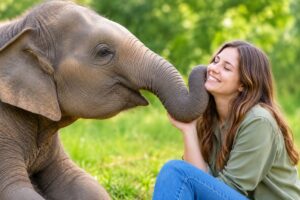
Also Read: Do Elephants Think Humans Are Cute? What the Science Actually Says
What Makes An Animal A Mammal?
The Australian Museum lists four defining features: hair or fur, mammary glands that produce milk in females, three middle-ear bones (malleus, incus and stapes), and a single dentary bone on each side of the lower jaw. Other sources add a neocortex, a four-chambered heart and a diaphragm.
Humans have all of these. Our ear ossicles carry sound, nursing mothers produce milk, and our bodies are covered in hair, however sparse. The criteria are the same for every mammal, so there is no special exemption for us.
Where Humans Sit In The Tree Of Life
Our full classification is:
- Kingdom: Animalia
- Class: Mammalia
- Subclass: Theria (live-bearing mammals)
- Infraclass: Eutheria (placental mammals)
- Order: Primates
- Family: Hominidae (the great apes)
- Genus and species: Homo sapiens
The Australian Museum notes that humans fall within the primates, then the apes and specifically the Great Apes, and finally a distinct subgroup called hominins.
Humans are not a branch separate from the tree. We are one twig on it.
Do Humans Act Like Mammals?
A 2023 UC Davis-led study published in PNAS tested this directly. Researchers gathered data from 90 human populations covering 80,223 individuals and compared them with lifetime records of 45 free-ranging nonhuman mammals. The team concluded that humans are unique, but not exceptional, among mammals. Lead first author Cody Ross noted that reproductive inequality in humans and other mammals can be modeled with the same predictors.
The authors also stress that some human traits, such as heavy dependence on care from both parents, need further testing. This is an observational finding that invites more research, not a closed case.
Also Read: Are There Raccoons in the UK? Separating Facts From Myths
What Is Genuinely Different About Us?
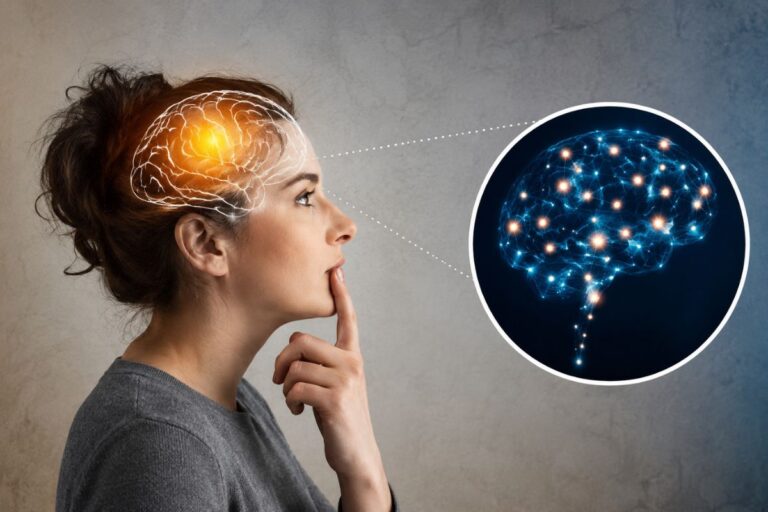
Being a mammal does not mean being the same as every other mammal. Cognitive biologist W. Tecumseh Fitch argued at the 2017 International Convention of Psychological Science that both camps in the old debate are partly right. His view was that people are animals too, and our main difference is that we can communicate what we think. He pointed to hierarchical syntax as a candidate for a uniquely human ability, and noted that vocal learning evolved independently in several groups of mammals and birds.
So humans are unusual mammals, not non-mammals.
What Is New In The Science?
There is no recent finding that challenges human mammalian status. The latest research deepens the picture:
- The mammal list keeps growing. The ASM’s Mammal Diversity Database lists 6,904 species in its current version, v2.5, released July 28, 2026. That count includes living and recently extinct species. A 2025 update reported that rodents make up about 41% of mammal diversity and bats about 22%. Older pages that cite roughly 4,500 mammal species are out of date.
- Ape genomes are now complete. In 2025, Nature published haplotype-resolved reference genomes for six ape species: chimpanzee, bonobo, gorilla, Bornean orangutan, Sumatran orangutan and siamang. The authors report 215 gapless chromosomes sequenced telomere-to-telomere. This allows far more detailed comparison with human DNA, including repetitive regions earlier drafts missed.
What Is The Creationist Objection?
Answers in Genesis agrees that humans are mammals. It says the answer is yes under any classification scheme, but it rejects the evolutionary explanation, reading mammalian traits as design features. This article is about classification, which is where all sides agree. Whether common ancestry explains the pattern is a separate question, and the evidence from genetics, fossils and anatomy supports it.
Common Myths
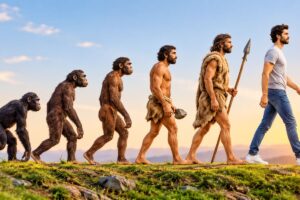
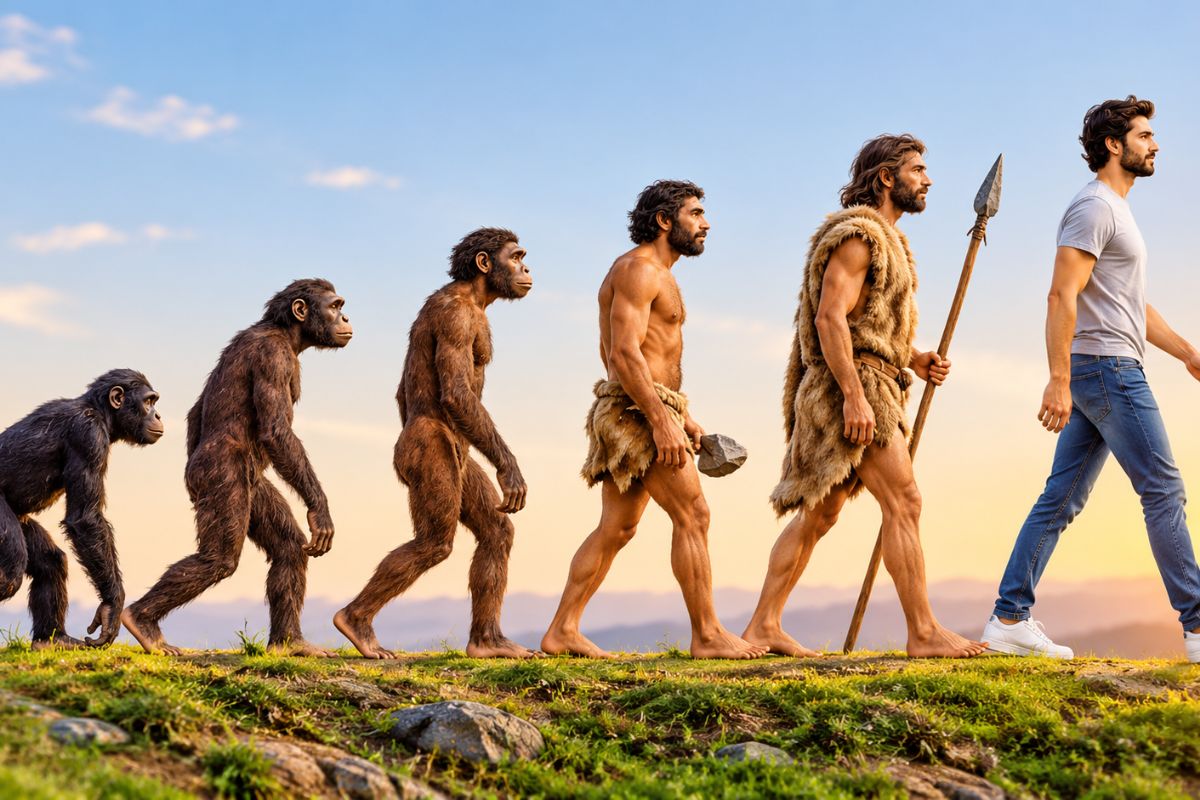
“We evolved from chimpanzees.” We did not. Humans and chimpanzees share a common ancestor that was neither. The Australian Museum dates the human family tree to roughly five to seven million years ago, and other sources give a somewhat wider range.
“Humans share about 99% of their DNA with chimps.” Figures near 98.8% are simplifications of aligned DNA letters. How much is shared depends on what is counted, such as insertions, deletions and repeats. The 2025 complete genomes allow more careful accounting.
“Mammals are reptiles.” Mammals belong to the synapsid lineage, which split from the reptile-and-bird lineage over 300 million years ago. That is why mammals are a separate class.
Also Read: Can Dogs Eat Marmite? Everything Dog Owners Need to Know
Frequently Asked Questions
Are humans mammals?
Yes. Humans have hair, mammary glands, three middle-ear bones and a single-boned lower jaw.
Are humans primates?
Yes. Humans belong to the order Primates, within the great ape family Hominidae.
Are humans animals?
Yes. In biology, anything that is not a plant, fungus or microbe and has our type of cell structure is placed in the animal kingdom.
What makes humans different from other mammals?
Language with hierarchical syntax, large brains for our body size, long childhoods and heavy cooperative care are the main candidates.
How many mammal species exist?
The database’s current version lists 6,904 living and recently extinct species.
Conclusion
Humans are mammals, and biology treats this as settled. The only open debates are about how we differ from other mammals and what explains the pattern, not about whether we belong in the group.
Sources and References
- Ross, C. T., Borgerhoff Mulder, M., et al. (2023). “Reproductive inequality in humans and other mammals.”
- Michel, A. (2017). “Humans Are Animals, Too: A Whirlwind Tour of Cognitive Biology.”
- American Society of Mammalogists Mammal Diversity Database, v2.5
- Yoo, D., et al. (2025). “Complete sequencing of ape genomes.” Nature,