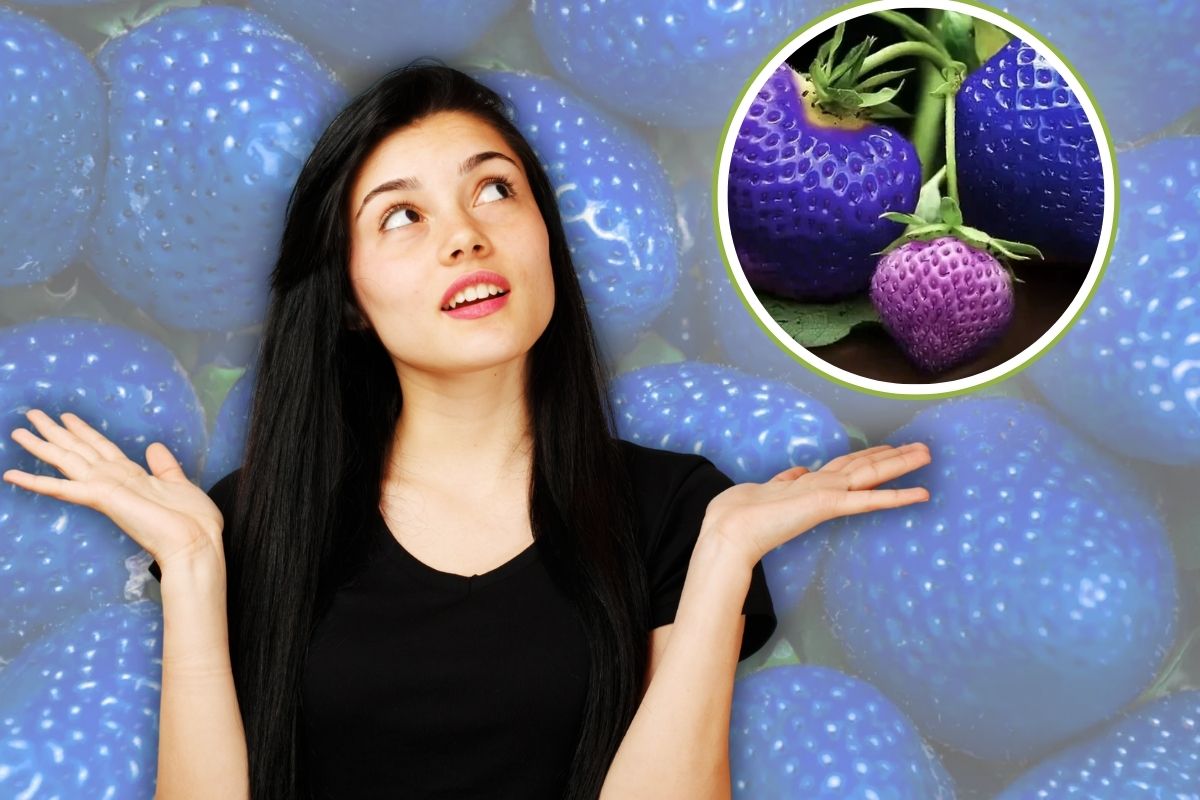
No, they don’t. Not really, anyway. Blue strawberries don’t exist in nature, and no strawberry plant, wild or bred, has ever produced one. What gives strawberries their colour is a pigment called pelargonidin-3-glucoside, and it’s just not built to make blue. So those photos flooding your feed? Edited. Every single time.
- Strawberries are all Fragaria at the end of the day, and none of them, not one cultivar anywhere, makes a blue berry.
- The colour comes down to pelargonidin-3-glucoside, and it just doesn’t bend toward blue the way the pigments in blueberries do
- Most of those “blue strawberry” pics you see? Someone’s used Photoshop’s replace colour trick, or dunked real strawberries in blue dye and snapped a photo.
- This myth resurfaces like clockwork every spring, usually peaking around 1 April.
- There was a real experiment in the 1990s involving an antifreeze gene from Arctic flounder, spliced into strawberries for frost resistance. Never made them blue. Never went commercial either.
- Strawberries do come in other colours though. White ones exist, pineberries being the best-known example, along with a few Japanese varieties bred from a Chilean fruit called Fragaria chiloensis
Why People Think Blue Strawberries Are Real
Honestly, the photos are just really convincing. Someone takes an ordinary red strawberry, tweaks the hue in an editing app, and posts it with zero context. By the time it’s been shared a hundred times, nobody remembers where it came from, and people start assuming it must be a real fruit somewhere out there. Then you’ve got seed listings on Amazon and eBay making things worse, selling “blue strawberry” or “African blue strawberry” seeds. According to Snopes, plant those, and you’ll get exactly what you’d expect: a regular red strawberry, if anything grows at all.
Also Read: Are Crumpets Healthy for Weight Loss or Getting a Bad Rap?
The Antifreeze Myth
Okay, so there’s a grain of truth here. That’s probably why it won’t die. In the late 90s, scientists actually tried it, splicing an antifreeze gene from Arctic flounder into strawberry plants. Not for looks. For frost resistance, so the fruit wouldn’t turn to mush after a cold snap. Snopes wrote it up. Even the New York Times mentioned it back then. Didn’t make anything blue, though. And it never once showed up in a shop, not then, not since.
Do Blue Strawberries Exist? Health Benefits and Scientific Facts
Right, so blue strawberries, made up. The red ones on your kitchen counter, though? Actual science there. Pelargonidin-3-glucoside, that’s the pigment giving them colour, and it’s not just sitting there looking pretty. It’s an anthocyanin, and it’s got real anti-inflammatory, antioxidant stuff going on. The British Journal of Nutrition looked at this and found strawberry anthocyanins linked to lower risk of coronary heart disease, cardiovascular disease too. Maybe cancer risk. Maybe brain function. Research’s still catching up on some of that. Then there’s a Food & Function study that found the same compound fighting inflammation and oxidative stress, cellular-level stuff. Anyway. Colour myths, ignore them completely. But actually eating strawberries? Still a good call.
Also Read: Myth or Fact: Does Eating Carrots Improve Eyesight?
What Real Strawberry Colour Variation Looks Like
Red isn’t the only option, even if blue is a dead end. White strawberries are genuinely a thing, pineberries especially, and they’ve got this odd, faint pineapple flavour to them. They trace back to a Chilean fruit, Fragaria chiloensis. Japan grows a version too, big white berries dotted with red seeds, often sold as a premium treat. Black strawberries, though? Same story as blue. Fake, built on edited photos and dodgy seed listings.
Strawberry Colour Claims Compared
| Claimed Variety | Real or Fake | Explanation |
| Red Strawberry | Real | The standard strawberry variety, naturally coloured by the pigment pelargonidin-3-glucoside. |
| White Strawberry (Pineberry) | Real | A genuine cultivated variety bred from the Chilean Fragaria chiloensis species. |
| Blue Strawberry | Fake | No naturally occurring or commercially bred blue strawberry exists. Images are typically edited or artificially dyed. |
| Black Strawberry | Fake | Another internet hoax. There is no recognised black strawberry cultivar. |
| GM Antifreeze Strawberry | Partly Real Research | Scientists tested frost-resistance genes in the 1990s, but no blue or commercially available GMO strawberry resulted. |
Frequently Asked Questions
Are blue strawberry seeds sold online genuine?
No. Seeds marketed as “blue strawberry” or “African blue strawberry” just grow into ordinary red strawberry plants. If they grow at all.
Why do strawberries turn red instead of blue?
Because their main pigment, pelargonidin-3-glucoside, is structurally different from the anthocyanins in blueberries. It simply can’t produce a blue shade.
Is the Arctic flounder gene story true?
Partly, yes. Scientists really did experiment with an antifreeze gene from Arctic flounder in strawberries during the 1990s. But it was about frost resistance, not colour, and the fruit was never blue or sold to anyone.
Do any real strawberry varieties come in colours other than red?
Yes. White strawberries are the real deal, pineberries and certain Japanese varieties included.
Sources & References
- Are Blue Strawberries Real? – Snopes
- The Disappointing Truth About Blue Strawberries – Tasting Table
- Bioavailability of Strawberry Antioxidants in Human Subjects – British Journal of Nutrition
- Molecular Mechanism of Pelargonidin-3-O-glucoside in Strawberry – ScienceDirect