The UK gains four main things from Prince William and Kate’s India tour: visibility for its new trade agreement with India, high-level political access in New Delhi, a wave of goodwill that conventional diplomacy struggles to create, and a stronger claim to leadership on climate innovation. None of these is a signed deal. All of them are useful to a country that wants to turn the UK-India Comprehensive Economic and Trade Agreement (CETA) from a document into real trade.
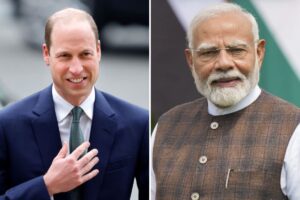
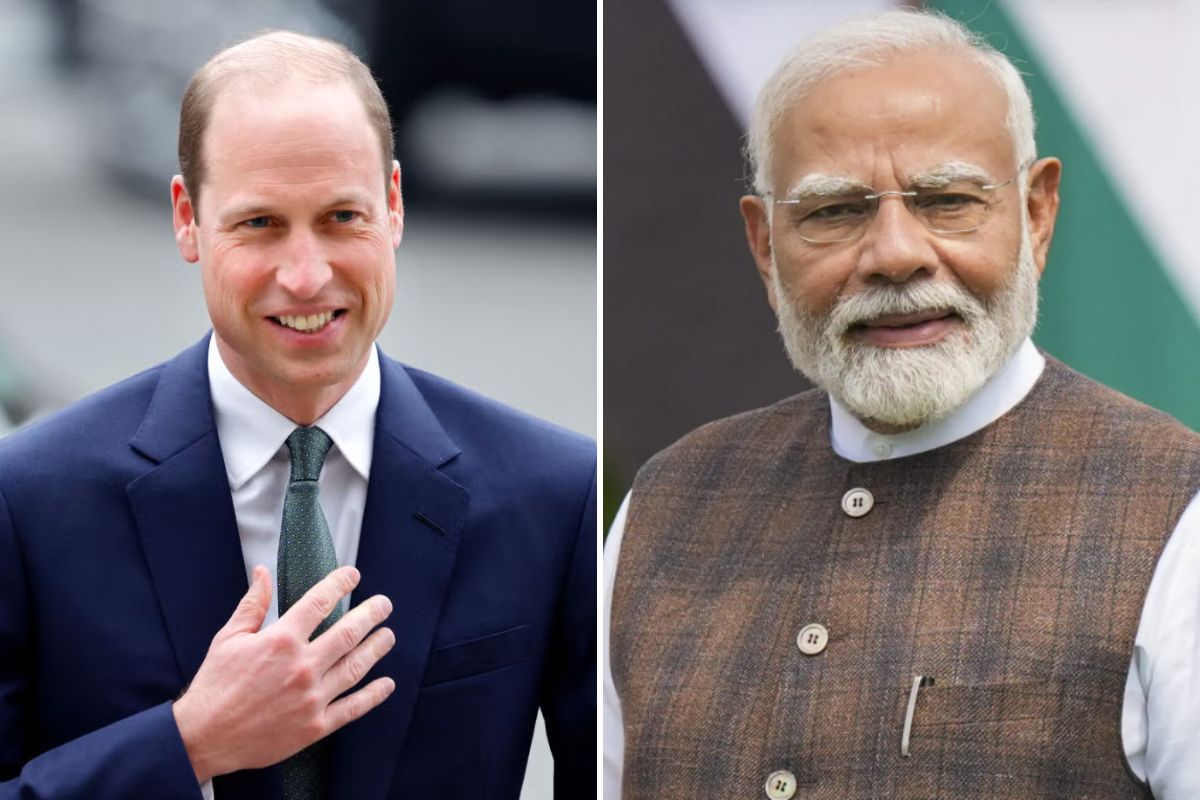
- The Prince and Princess of Wales visited India from 16 to 18 November 2026, with the Earthshot Prize Awards in Mumbai as the centrepiece and a meeting with Prime Minister Narendra Modi in New Delhi to close.
- CETA entered into force on 15 July 2026, so the visit lands at the start of the implementation phase, when momentum matters most.
- The UK Government reportedly asked the couple to travel to Delhi for the Modi meeting, according to GB News. That makes the trip an instrument of UK foreign policy as well as a royal engagement.
- Royals do not negotiate trade terms. The benefit is goodwill, attention and access. Whether it becomes investment depends on governments and businesses.
What Happened During The Visit
The tour was short and tightly packed.
Monday, 16 November (Mumbai).William and Kate played street cricket with Sachin Tendulkar in Ballard Estate, rode the Mumbai metro and attended the Earthshot Prize Impact Assembly at the Jio World Convention Centre, according to Reuters and ABC News.
Tuesday, 17 November (Mumbai). William presented the sixth annual Earthshot Prize Awards, the first held in India. Five winners received £1 million each, a total of £5 million, chosen from 15 finalists. The winners were Bhutan, Mahindra Last Mile Mobility (India), Niue Ocean Wide Trust, PFAS-Free France and Ørsted, as listed on the Earthshot Prize website.
Wednesday, 18 November (Mumbai and New Delhi). William visited Dharma Productions, Karan Johar’s film studio. Kate visited a maternity hospital. Both took part in a textile-printing session at a craft school. They then flew to New Delhi to meet Modi at his official residence complex.
It was also a personal milestone. Reuters described it as the Princess of Wales’s most high-profile overseas visit since her cancer treatment in 2024. The couple’s previous official visit to India was in 2016.
Benefit 1: A Shop Window For The UK-India Trade Deal
The timing is the most important fact about this visit. CETA was signed on 24 July 2025 and entered into force on 15 July 2026, together with a companion social security agreement known as the Double Contribution Convention. The UK government has called it the most economically significant bilateral trade deal it has signed since leaving the European Union.
The numbers explain the interest. UK-India trade was worth around £48 billion in 2025, according to the Overseas Development Institute. Government forecasts put the gain at roughly £25.5 billion a year in extra bilateral trade, with UK GDP up £4.8 billion and Indian GDP up £5.1 billion annually once the deal is fully implemented. On the UK’s side, Indian tariffs fall on 90% of tariff lines, with 64% of UK products duty-free from day one and 85% eventually.
A signed agreement is only a promise. Exporters have to learn the paperwork, find buyers and decide to commit money. A royal visit, wrapped in global media coverage, puts the UK’s name on the Indian news agenda at exactly that moment. Manjeev Singh Puri, a former Indian ambassador to the European Union, told Open Magazine that the visit helps sustain momentum when a trade agreement is in place and the mood is positive.
There is also a competitive angle. One legal analysis notes that the EU concluded its own trade agreement with India in January 2026, with entry into force expected no earlier than early 2027. If that holds, UK firms have a window to establish themselves in the Indian market before European rivals enjoy similar terms. Anything that helps British companies move first has real commercial value.
Benefit 2: Political Access At The Very Top
The Modi meeting was a late addition to the programme, according to Open Magazine’s reporting. Kensington Palace said the conversation reflected “deep and growing connections” across trade, investment, defence, security, technology, education and culture. Modi’s office said he thanked William for bringing the Earthshot Prize to India.
For London, this is access that is hard to buy. Nicholas Nugent, a former BBC journalist, argued in the same Open Magazine piece that the UK government wanted the prince to call on Modi to back the trade agreement and lift the UK’s standing, because the UK’s relatively new Prime Minister and Foreign Secretary had not yet visited India. That is one analyst’s reading, not an official statement, but it fits GB News’s report that the government made the request.
The arrangement suits both sides. A prince carries no negotiating mandate, so the conversation stays warm and low-risk. A prime minister can show respect for Britain without conceding anything. The UK, meanwhile, keeps a senior channel open between ministerial meetings.
Benefit 3: Soft Power That Reaches Beyond Government
Cricket, cinema and craft were not filler. They were the point.
Shrabani Basu, the historian and author of Victoria & Abdul, told Open Magazine that such visits are about soft power, and that ultimately Britain wants business and investment. The sequence of events backs her up. Street cricket with a national icon reaches millions of Indian fans. A visit to a leading Bollywood studio puts the royals in front of an industry with a global audience and a large following in the UK.
The UK has an unusually deep stock of connections to draw on: a large Indian-origin population, thousands of Indian students in British universities, shared language and a common sporting passion. A royal visit makes those links visible and gives them an emotional frame. That matters for investors and students deciding where to put their money and their futures.
Dr Ruhi Khan of the London School of Economics, who studies India-UK partnerships in the creative industries, described the visit as a strategic exercise in commercial and cultural diplomacy rather than a ceremonial tour. She argues that the cultural warmth it generates can support investment, creative collaboration and the movement of talent between the two countries.
Also Read: Why Prince Harry Says Leaving the UK Led to a Two-Week Depression
Benefit 4: A Platform For Green Technology and Climate Leadership
The Earthshot Prize is William’s own project, founded in 2020 through the Royal Foundation, with the aim of scaling at least 50 environmental solutions by 2030. Holding the 2026 edition in India served several UK interests at once.
It placed a British-founded prize at the centre of a major emerging economy’s climate conversation. It put UK investors and innovators in the same room as Indian entrepreneurs. And it gave a British institution credit for celebrating Indian success: Mahindra Last Mile Mobility won for building a profitable electric three-wheeler business at scale. Modi’s praise for India’s growing leadership in environmental innovation, reported by the Indian government and the Kensington Palace spokesperson, shows the message landed.
For the UK, which wants clean energy, climate finance and green technology to be part of its export story, this is useful positioning. India is the setting where many climate problems are largest and many solutions are being tested.
Benefit 5: Signals On Defence, Technology and Education
It would be wrong to claim the visit produced defence or technology agreements. It did not, and no source reports one. What it did was signal intent. Kensington Palace’s list of topics included defence and security alongside technology and education, and Reuters, as relayed by Ukrainian outlet UNN, reported that strategic partnership and defence cooperation were also discussed.
Those are the areas where the UK and India say they want to deepen cooperation. A royal meeting does not move them forward on its own, but it adds political weight to the conversations that ministers and officials are already having.
What The Visit Cannot Deliver
Honest analysis needs limits, and there are several.
- Royals do not set policy. Open Magazine makes the point plainly: the family does not negotiate trade agreements or determine foreign policy. Its value lies in visibility and symbolism.
- Goodwill is not investment. Pranav Bhanot, a London-based lawyer and British-Indian community leader, stressed that businesses need legal and regulatory certainty before committing capital.
- History remains. The monarchy is tied to the era of British rule in India. The relationship today is between equals, and India’s priorities will not always match London’s, particularly on trade, immigration and security.
- Implementation is still being tested. One analysis of CETA’s early months reported that August 2026 bilateral trade rose 15.08% year on year to nearly $2 billion. That is an encouraging early signal from a single source, not proof of lasting change. The same analysis flags certificate-of-origin systems that were still being finalised at the start.
How To Judge Whether The Visit Worked
The photographs will fade quickly. These are better measures:
- Trade data. Do UK exports to India keep growing in the months after CETA began?
- Business activity. Do UK companies announce Indian investments, partnerships or new offices?
- Follow-up visits. Do UK ministers and senior officials visit India soon, building on the royal opening?
- Earthshot connections. Do winners and finalists form lasting partnerships with UK and Indian investors?
- Official cooperation. Do talks on defence, technology and education produce concrete announcements?
As Open Magazine put it, the test begins after the spectacle.
Also Read: What Did Meghan Share in Her Video of the Family’s UK Return?
Frequently Asked Questions
Why did Prince William and Kate visit India in November 2026?
The main reason was the Earthshot Prize Awards in Mumbai, held on 17 November. The trip also included a meeting with Prime Minister Modi in New Delhi on 18 November. GB News reported that the UK Government asked the couple to travel to Delhi for that meeting.
How long was the royal visit to India?
Three days, from Monday 16 November to Wednesday 18 November 2026.
What is the UK-India trade agreement?
The Comprehensive Economic and Trade Agreement (CETA) lowers tariffs between the two countries and covers goods, services and some financial and professional-services access. It was signed on 24 July 2025 and entered into force on 15 July 2026.
How much could the trade deal be worth?
The UK government forecasts about £25.5 billion a year in extra bilateral trade once the agreement is fully in place, alongside a £4.8 billion annual boost to UK GDP.
Did William and Kate sign any agreements in India?
No. Royals do not sign trade or diplomatic agreements. The visit produced discussions and goodwill, not treaties.
Who won the 2026 Earthshot Prize?
Bhutan, Mahindra Last Mile Mobility, Niue Ocean Wide Trust, PFAS-Free France and Ørsted each won £1 million.
When did William and Kate last visit India?
In 2016, when they were the Duke and Duchess of Cambridge.
Conclusion
The UK did not travel to India for a headline. It sent its most recognisable family to a country it badly wants as a partner, at the exact moment a landmark trade deal began to operate. The visit offered visibility, access and warmth. Those things are real, but they are not guaranteed to last. Whether this tour is remembered as diplomacy or just a well-photographed week will be decided by trade figures and business decisions in 2027.