Royals do not negotiate or sign anything. But royal visits really boost trade deals for the UK by opening doors that ministers cannot, creating goodwill before talks begin. Whitehall treats the monarchy as a soft-power tool, though tangible proof of extra exports stays thin.
The pattern is easy to spot once you look for it. A palace welcome arrives, a handshake follows, and months later a trade agreement lands. Whether the first thing caused the last is where the argument begins.
- The royal family carries out overseas visits at the request of the government, not on a whim.
- Brand Finance valued the monarchy’s trade contribution at £150 million a year in its 2017 study.
- King Charles hosted Qatar’s emir in December 2024 while the UK chased a Gulf trade pact.
- That UK–GCC agreement was concluded on 20 May 2026, covering trade worth over £53 billion.
- India’s CETA was signed in July 2025 and came into force on 15 July 2026.
- No published study proves a royal visit directly causes extra export orders.
What Royal Visits Do for British Trade
The Foreign Office has never hidden the arrangement. Clarence House once corrected press reports about a “pay rise” for the then Prince of Wales by explaining that all official overseas visits happen at the British government’s request and are paid for by the government. Simon Fraser, then head of the Diplomatic Service, said members of the Royal Family travel abroad to “promote our foreign policy objectives and UK interests throughout the world.”
He went further on the Prince’s travel that year, adding that “the visits of The Prince of Wales have supported British business, investment, and development goals and promoted our values around the world.”
So the visits are policy, not tourism. The Chartered Institute of Export & International Trade has set out several channels through which this policy works: Brand Britain, the Commonwealth, tourism, and plain old ambassadorship. Its analysis noted that British exports to fellow Commonwealth nations reached £31.6 billion, the highest level in 15 years.
A Foreign Office insider put the mechanism more bluntly to the Daily Express. “The Royal Family brings a sense of occasion and seriousness to overseas visits. If you add a Royal, it shows you mean business. They would give any negotiations a turbo boost.”
Also Read: Why Prince Harry Says Leaving the UK Led to a Two-Week Depression
The Gulf Test
December 2024 gives us the clearest recent case. As The Guardian reported, Keir Starmer and then Foreign Secretary David Lammy leaned on the monarchy while chasing a free trade agreement with the Gulf. Charles welcomed Qatar’s emir, Sheikh Tamim bin Hamad Al Thani, to Buckingham Palace. Bahrain’s king had visited Windsor weeks earlier. Prince William appeared alongside Oman’s crown prince in London.
The deal did land. The Department for Business and Trade confirmed that negotiations with the Gulf Cooperation Council concluded on 20 May 2026. Bilateral trade already sits above £53 billion, and officials expect roughly 20% growth, with £580 million of tariffs removed and £3.7 billion added to the UK economy each year.
Did the banquets do that? Partly, says Chatham House. Dr Neil Quilliam explained that Conservative churn had frustrated Gulf partners and that “during such times, it is commonplace to send royals to reassure Gulf partners that there is continuity in relations.”
India, CETA, and the Windsor Connection
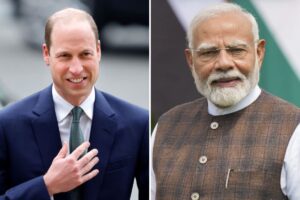
India tells a similar story. Narendra Modi signed the Comprehensive Economic and Trade Agreement in July 2025, then met King Charles at Sandringham days later. The deal entered into force on 15 July 2026.
The follow-up was royal too. The Prince and Princess of Wales toured India from 16 to 18 November 2026 for the Earthshot Prize in Mumbai. The Economic Times covered their meeting with Modi, who welcomed the momentum in bilateral ties and praised the prize for recognising Indian innovators.
Europe works the same way. The Luxembourg Times framed Grand Duke Guillaume’s first London visit as head of state against roughly €25 billion of bilateral trade, up nearly 19% year on year.
And royal diplomacy sometimes unlocks politics rather than commerce. Sky News noted that Charles met European Commission president Ursula von der Leyen as the Windsor Framework talks reached a climax, without suggesting he joined the negotiations.
Also Read: What Did Meghan Share in Her Video of the Family’s UK Return?
A Long History of Soft Power
None of this is new. Politico traced British royal visits to the United States back to 1860, when the future Edward VII was hosted by President James Buchanan. George VI and Queen Elizabeth went to Washington in 1939, months before war broke out, in a charm offensive aimed at Franklin Roosevelt and Congress.
Institutionally, Britain once formalised this role. The Duke of Kent spent 25 years as vice-chairman of the British Overseas Trade Board and became the first special representative for international trade and investment in 1976. Prince Andrew held that role until 2011. It now sits vacant.
Where the Evidence Falls Short
Brand Finance remains the main source. Its 2017 work put the monarchy’s capital value at £67.5 billion and its annual economic contribution at £1.766 billion, including about £150 million from trade. Investment Monitor quoted the firm’s Konrad Jagodzinski on why warrants matter: “We found that US consumers are significantly more likely to buy a certain brand if it was seen to be endorsed by royals.”
But the consultancy’s own coronation-year analysis showed a smaller recurring picture. Benefits of £567 million sat against £370 million of costs, leaving about £197 million a year. The Telegraph quoted Brand Finance conceding the net benefit is “significantly lower than in the past, during the reign of Queen Elizabeth II.” Costs are easier to pin down. The Sovereign Grant hit £132.1 million in 2025–26, with travel at £5.1 million.
Critics push back hard. The Republic argues Chester Zoo draws more visitors than Buckingham Palace. Far Out Magazine concluded the tourism case is “a minor point, a footnote,” noting tourism contributes only about 3% of UK economic output against an EU average of 4.5%. Visit Britain, meanwhile, collects no statistics on the royal family as an attraction at all.
Camilla Tominey captures the defence neatly: the royals “pack a soft power punch wherever they go.”
Final Verdict
Royal visits do not create trade deals. Negotiators do that over years. What a royal visit buys is attention, continuity and a room full of decision-makers who turned up because a king asked. That is worth something real. It is just very hard to count.
Also Read: Prince Harry and King Charles Reunion: What Actually Happened at Highgrove
Frequently Asked Questions
Do royal visits directly create UK trade deals?
Ans: No. Officials and negotiators strike the deals. Royal visits build goodwill and secure access, which can speed talks along and signal long-term commitment.
Who decides where the royals travel?
Ans: The British government does. Clarence House has confirmed that official overseas visits are undertaken at the government’s request and funded by the government.
How much is the monarchy worth to UK trade?
Ans: Brand Finance estimated around £150 million a year from trade in its 2017 report. No comparable in-depth study has been published since.
Did the royals help seal the UK–Gulf trade deal?
Ans: Royal Hospitality ran alongside the talks in late 2024, and the agreement was concluded in May 2026. Analysts call it reassurance rather than negotiation.
What did the royal family cost taxpayers last year?
Ans: The Sovereign Grant totalled £132.1 million in 2025–26, split between £72.1 million core funding and £60 million for palace reservicing.
Is the royal trade ambassador role still active?
Ans: No. The post of special representative for international trade and investment has stayed vacant since Prince Andrew stepped down in 2011.
Sources & References
- Investment Monitor – We found that US consumers are significantly more likely to buy a certain brand if it was seen to be endorsed by royals.