
The short answer: Are crumpets healthy for weight loss? They can slot into a slimming plan, but they’re no magic bullet. Crumpets are low in fat and fairly modest in calories, which helps.
The snag is that they’re also low in fibre and protein, so they won’t keep you full for long, and some are surprisingly high in salt. Here’s what the evidence actually shows.
- A crumpet has calories between 90 and 110 and has very little fat.
- They’re usually made from refined white flour, which is low in fibre.
- Low fibre and protein mean they can’t satiate hunger for long.
- Some crumpets have the same amount of salt as two McDonald’s fries.
- Toppings make or break a crumpet for weight loss.
What’s Actually in a Crumpet?
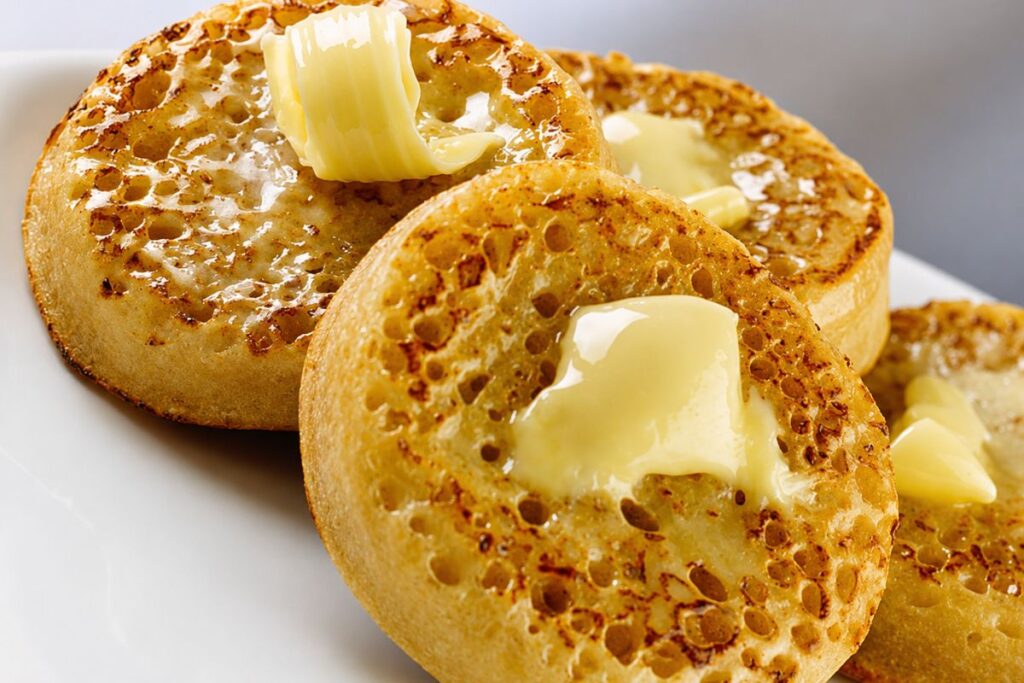
Crumpets are a basic mix of flour, water or milk, yeast, salt and sometimes baking powder, cooked on a griddle for that holey, spongy top.
The gut-health brand Biomel states a standard shop-bought crumpet has nutrition at around 90–110 calories and is low in fat and low in sugar unless you load on the toppings. So far, so slimming-friendly. The catch? Most are made from refined white flour, which digests quickly and won’t keep you full for long.
Also Read: Nutritional Value of Semi Skimmed Milk: Why It’s a Popular UK Choice
Where Crumpets Fall Short for Weight Loss
Feeling full is half the battle when you’re cutting calories, and this is where crumpets wobble. A ranking by The Telegraph notes crumpets contain around 40% less protein than muffins, bagels and sliced white bread, so they may not sustain you as effectively.
Senior nutritionist Hannah Trueman of Body Fabulous Health Clinic, writing for The Independent, agrees:
“Whilst they can provide some nutrients like iron and B vitamins from fortified flour, they are highly processed and lack substantial fibre or protein.”
There’s a small silver lining. Those fortified nutrients are real. Under the 1998 Bread and Flour Regulations, white and brown flour must contain added calcium, iron, thiamine (B1) and niacin (B3). So you do get a few micronutrients, just not the staying power.
The Salt Problem
Salt won’t shift the scales, but it matters for overall health.
Research by campaign group Action on Salt, published via Blood Pressure UK, found one standard Warburtons crumpet pack contains 0.81g of salt — the same as two portions of McDonald’s Small Fries. With a 6g daily limit and UK adults already averaging 8.4g, that adds up fast.
The good news is salt content varies a lot. Warburtons sit at 1.48g per 100g, while Sainsbury’s Taste the Difference Luxury Multiseed Sourdough manages just 0.94g per 100g — a 58% gap for the very same 55g crumpet. So choosing wisely genuinely helps.
Also Read: Is Black Pudding Healthy? Let’s Settle the Debate for Good
Are Crumpets Really “Junk Food”?
You may have seen crumpets branded as junk food, and that’s not made up.
Reporting from the BBC confirms they’re caught in a new advertising ban on “less healthy” products, due in October 2025, which restricts pre-9pm TV ads and paid online ads to help curb childhood obesity. The change is expected to strip 7.2 billion calories a year from UK children’s diets.
But the “less healthy” label comes from a scoring system based on salt, fat, sugar and protein — and versions with no added sugar, salt or fat can dodge the ban entirely. Being on the list doesn’t make crumpets uniquely fattening.
The Best Way to Eat Them
Toppings decide everything. Butter, jam and chocolate spread tip a crumpet into treat territory. Protein and fibre do the opposite and keep you fuller.
Nutritionist Zoe Davies offers a practical steer:
“To make crumpets a healthier choice, consider adding no-added-salt peanut butter or eating them with scrambled eggs to make one crumpet more substantial. This keeps you fuller for longer and keeps the salt content down. Alternatively, try topping with some fruit, such as sliced banana, which will help count towards the five a day many of us aren’t achieving.”
It’s also worth picking your brand. Waitrose Sourdough crumpets came out as the healthiest in The Telegraph’s test — the only ones free of artificial preservatives — at 95 kcal, with under 0.5 g of fat and just 0.59 g of salt each.
Also Read: Does Black Coffee Burn Fat? Here’s What the Science Actually Says
Are Crumpets Healthy for Weight Loss?
Time to weigh it up. The case in favour is decent: crumpets are low in fat, naturally portion-controlled at one per serving, and fairly low in calories. The case against is just as real: on their own, they’re low in fibre and protein, so they don’t keep you full, and plain white versions can be high in salt.
So crumpets aren’t a weight-loss food in their own right. What you buy and what you put on top matter far more than the crumpet itself.
Final Verdict
There is so much misleading information circulating about crumpets online. Crumpets aren’t bad for weight loss, but calling them a “healthy” weight-loss choice oversells it.
Eaten in moderation, chosen in a lower-salt or wholegrain form, and topped with protein or fibre, they can fit comfortably into a balanced slimming diet. Drowned in butter and jam, they don’t. The claim is true only with some big caveats.
Sources & References:
- Biomel – A standard crumpet has 90–110 calories, is low in fat and is low in sugar unless you load on the toppings.
- BBC – Crumpets have been branded as junk food.
- Independent – Crumpets have some nutrients like iron and B vitamins in the fortified flour.
- Telegraph – Crumpets contain around 40% less protein than muffins, bagels and sliced white bread.
- Blood Pressure UK – One normal Warburtons crumpet pack contains 0.81g of salt.