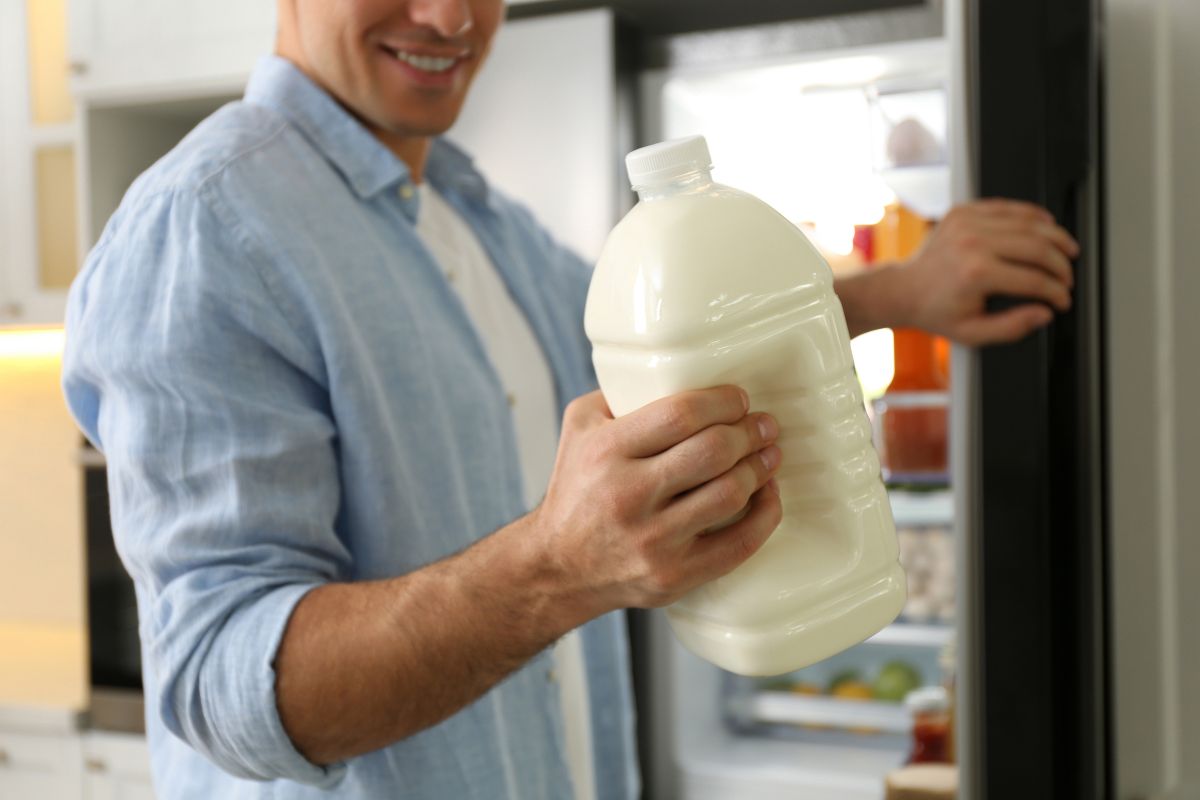
Quick Answer: Nope, skip the door. That little jug-shaped shelf is the warmest, most unstable spot in your whole fridge. Milk lasts noticeably longer on a middle or bottom shelf, pushed toward the back, where the temperature actually stays put near 40°F (4°C).
I used to keep milk in the door too — everyone in my family did, it’s just where the shelf is shaped for it. Then a food safety instructor I took a class from years ago pointed out something I’d never thought about: that shelf gets hit with a blast of room-temperature air every single time the door opens. I started paying attention after that, and honestly, milk kept toward the back just lasted longer. No science degree needed to notice it.
For home cooks, parents stocking the family fridge, and anyone who’s ever wondered why milk goes sour before its date.
The Key Facts
| What | Why it matters |
| Door temp can run 5–10°F warmer than the rest of the fridge | Bacteria multiply faster with every warm spike |
| Milk should stay at or below 40°F (4°C) | This is the USDA’s cutoff for slowing bacterial growth |
| Fridge doors open 15–20+ times a day in most homes | Each opening resets the warm-cool cycle on door shelves |
| The back of an interior shelf generally provides a more stable environment than the door. | Farthest from the door, and cold air naturally sinks |
Also Read: Does Unhomogenised Milk Offer More Benefits? The Facts Behind the Trend
Why The Door Actually Hurts Milk
Here’s the part that surprised me most: it’s not one bad moment that ruins milk, it’s the repetition. Every time the door swings open — coffee run, kid grabbing a snack, someone standing there deciding what to eat — a wave of warm kitchen air hits the door shelves first. The fridge cools it back down, and then it happens again ten minutes later.
Milk needs a consistently cold environment because refrigeration slows the growth of harmful bacteria. Pasteurization greatly reduces harmful bacteria, but milk can still become contaminated through handling or improper storage. Repeated temperature fluctuations can also shorten its shelf life.
Where Milk Should Actually Live
Push it toward the back of a middle or lower shelf. That spot barely feels the temperature swing from the door opening, and since cold air sinks, lower shelves usually run a touch colder than the top anyway.
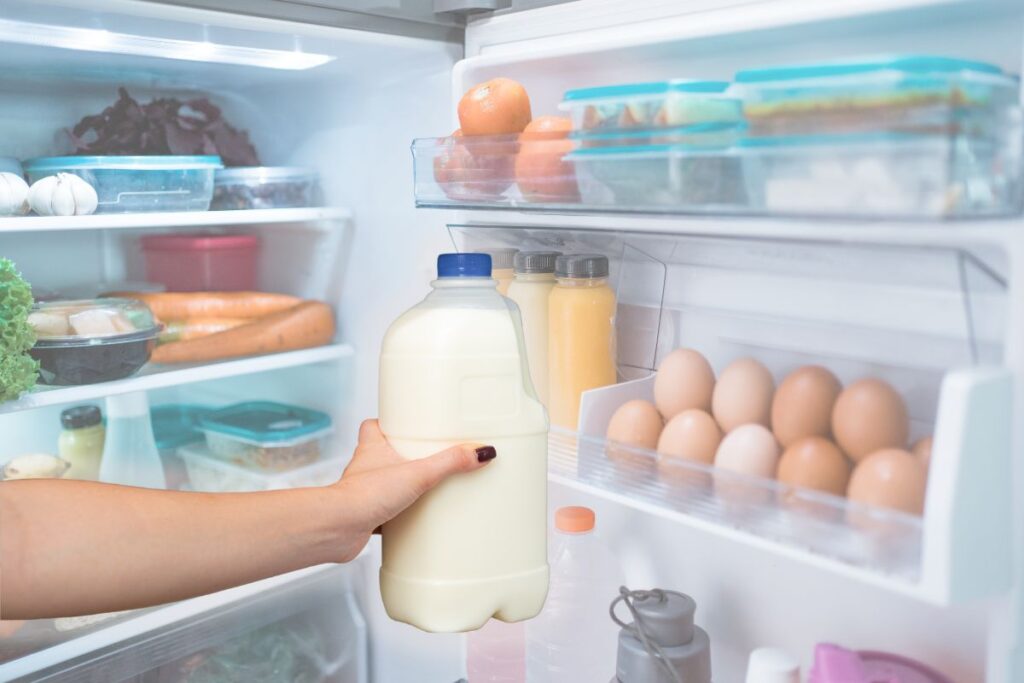
If your fridge model comes with a dedicated dairy shelf near the back — some newer models do — that’s built for exactly this. If not, just get in the habit of shoving the jug all the way back instead of leaving it up front where it’s easy to grab.
What’s Fine To Leave In The Door
Not everything suffers there, so don’t feel like the door has to sit empty. Condiments like ketchup, mustard, and salad dressing hold up because of the salt, sugar, or vinegar in them. Pickles, hot sauce, and juice with preservatives are usually fine too. Butter is often the one dairy exception — plenty of fridges even come with a labeled compartment for it right in the door, because butter just isn’t as sensitive to warmth as milk is.
Also Read: Nutritional Value of Semi Skimmed Milk: Why It’s a Popular UK Choice
How To Tell Milk Has Actually Gone Bad
- Smells sour the second you crack the seal
- Small clumps or visible curdling when poured
- Texture feels a little thick or slimy
- A faint yellow tint instead of clean white
These are common signs of spoilage, but smell and appearance alone cannot determine whether milk is safe to drink. Keep milk properly refrigerated and follow the storage instructions on the package.
Habits Worth Building
- Get a $10 fridge thermometer — a lot of fridges run warmer than their dial claims
- Don’t leave milk on the counter past two hours
- Pour into a glass instead of drinking from the carton, so you’re not reintroducing bacteria into it
- Buy only what you’ll finish, instead of stocking up for the month
Also Read: 8 Science-Backed Advantages of Green Tea with Lemon for Daily Wellness
Frequently Asked Questions
Is milk in the door actually dangerous, or just less fresh?
Mostly a freshness issue, not an instant hazard. The repeated temperature swings speed up spoilage, so milk sours sooner than it would in a stable, cold spot — but it’s not the same as leaving milk out on the counter all day.
What’s the best shelf for milk?
The back of a middle or bottom shelf, as far from the door as the layout allows.
Can any dairy stay in the door?
Butter, generally. Milk, yogurt, soft cheese, and eggs all do better on an int
erior shelf.
What temperature should the fridge be for milk to stay fresh longest?
40°F (4°C) or lower — check with a thermometer, not just the dial setting.
Does this apply to oat, almond, or soy milk too?
Yes, once it’s opened. Plant-based milks behave a lot like dairy after the seal is broken and hold up better with the same steady, cold placement.
Who does this matter most for?
Households that go through milk slowly, families with kids constantly opening the fridge, and anyone who’s noticed milk turning before the date on the carton.
Note: Storage habits are simple to fix and make a real difference in how long your milk actually lasts. A small shift — moving the carton from the door to the back of a shelf — is one of the easiest food-waste and food-safety wins in the kitchen.
Sources & References: