Quick Answer: Two in the morning. You’ve counted sheep, ceiling cracks, and then the hours until the alarm. Stop trying. Go limp with 4-7-8 breathing or progressive muscle relaxation, make the room cold and pitch black, and put your phone away an hour before bed; if you’re still awake after 20 minutes, get up. So how can you fall asleep fast when your brain replays a chat from 2017?
- Chasing sleep is like chasing a cat. Relax the body to make it come.
- Breathing, muscle-squeezing, and a daydream settle an overactive nervous system.
- Cold, dark, and quiet rooms also help.
- Late coffee, a nightcap, a big curry, or 1am scrolling are the common culprits.
- If you have three rough nights a week, every week, consult your GP.
Why Sleep Does Not Come Easily
There’s always a reason. Stress and worry are at the top. Such reasons affect your body’s circadian rhythm, which runs for roughly 24 hours and decides when sleep hormones are released, so going to bed at 10 one night and 1am the next leaves it clueless. Add late caffeine, a heavy dinner, a stuffy room, and a screen in your face. Sometimes it’s medical: insomnia, sleep apnoea, restless legs.
And it costs you. Research in The Journal of Clinical Endocrinology & Metabolism found that even the loss of two hours of sleep a week can lead to a significant increase in daytime drowsiness and psychomotor impairment. Healthline reckons roughly 1 in 3 people in the United States experience sleep deprivation.
Also Read: Is Sparkling Water a Healthy Drink Choice or Not? Find Out
How Long Should It Actually Take?
The Cleveland Clinic puts it at 10 to 20 minutes for most people, and 45 is fine too. Sleep Foundation calls 15 to 20 the sweet spot. Under 10, and you’re already knackered.
How Can You Fall Asleep Fast? Simple Tips That May Help
- The military method: Taken from Lloyd Bud Winter’s 1981 book Relax and Win: Championship Performance. Face first, let your body go slack — even inside your mouth. Shoulders down, arms flopped. Breathe out; the chest goes, then the thighs and calves. Do it for ten seconds. Repeat “don’t think”. Navy airmen drilled it for six weeks and reportedly hit 96%. No trials have tested that, mind.
- The 4-7-8 breath: Dr Andrew Weil’s spin on yogic pranayama breathing. Tongue behind your top teeth. Whoosh the air out, then breathe in through your nose for four seconds, hold for seven seconds, and breathe out for eight seconds. Four rounds. If you have asthma, ask your doctor.
- Progressive muscle relaxation: Dr Edmund Jacobson’s idea, from 1959. Raise your eyebrows hard for five seconds, then drop them and wait for ten seconds. Big daft grin. Eyes screwed shut. Head tipped back. Then south: shoulders, chest, thighs, and feet. Tense, don’t strain.
- Picture somewhere calm: A 2002 University of Oxford study found people given imagery distraction fell asleep faster than those given general distraction or no instructions.
- Tell yourself to stay awake: Sounds daft but often works. Paradoxical intention: lie there, eyes open, and calmly decide you’re not sleeping.
- Press the sleep points: A 2019 meta-analysis suggests acupressure may slightly cut the time it takes. Spirit gate: the hollow under your palm, pinky side. Inner frontier gate: three finger-widths below the wrist crease. Wind pool: where neck joins skull.
Which Trick Suits You?
| Method | Best for | Time needed |
| 4-7-8 breathing | Anxiety | 2-5 minutes |
| Muscle relaxation | A tense body | 5-10 minutes |
| Guided imagery | A racing brain | 5-10 minutes |
| Calming music | Winding down | 15-20 minutes |
Set the Bedroom Up Properly
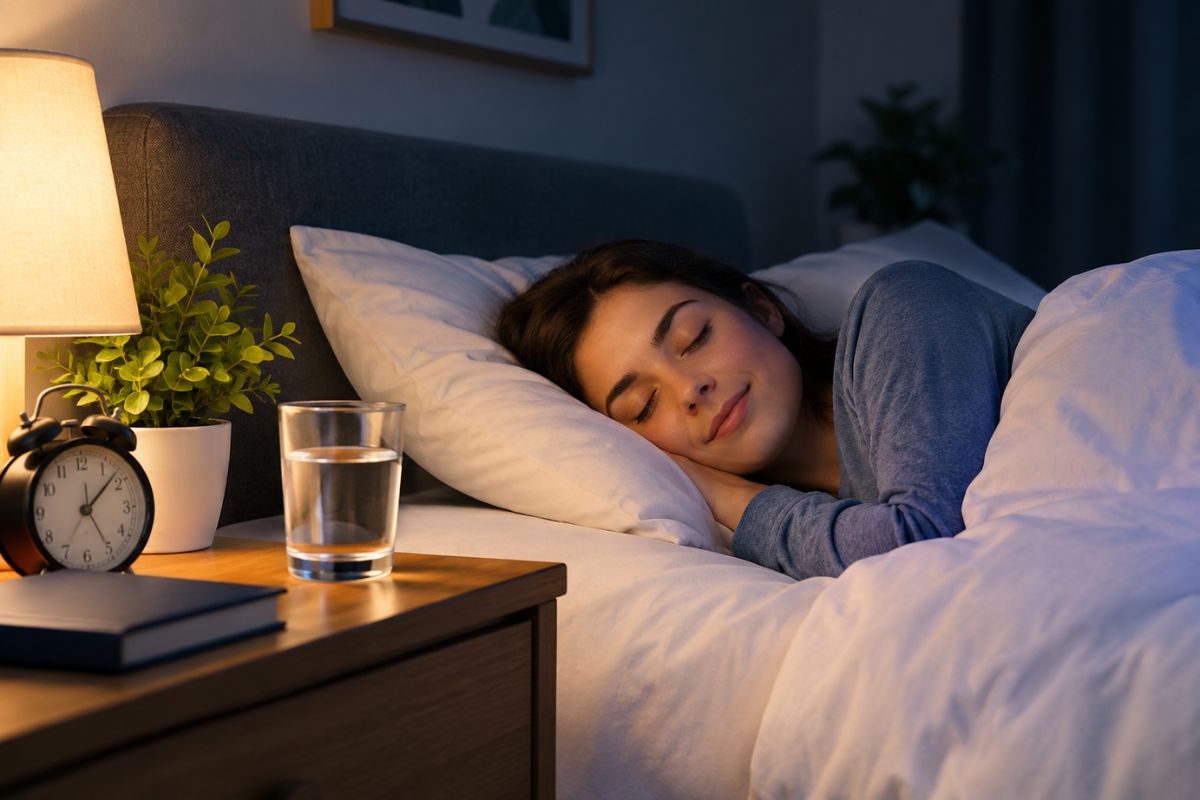
The NHS recommends keeping your bedroom quiet, dark, and cool. Don’t use phones for an hour before bed. Use earplugs if your neighbours are noisy. Curtains shut. Eye mask if light sneaks in. Clock to the wall. The National Sleep Foundation reckons 16 to 19°C. Sleep on your side; a ten-year-old mattress explains that achy back.
Food, Drink, and the Bath Trick
Caffeine lasts about three to five hours, so Medical News Today suggests a four-hour cut-off. For some, it’s a write-off at any hour. Booze and nicotine want a one-to-two-hour gap; a nightcap knocks you flat, then wakes you in the restorative stuff.
Dinner should be two hours before bed, or three hours if you have reflux. Peckish? Bananas, almonds, and chamomile tea. Then a bath an hour or two before: climb out, your core temperature drops, and that’s the signal.
Also Read: Is Fruit Juice as Healthy as Whole Fruit?
Daytime Habits That Pay Off at Night
A 2021 study found 60 minutes of exercise, four to five times a week for eight to 12 weeks, significantly improves primary insomnia. Sleep Health Solutions notes more than 55% of yoga practitioners report sleeping better, and 45 minutes of relaxing music before bed works too. Nap 20 to 30 minutes, early.
Mistakes That Keep You Awake
Compensating. Rough night, so you nap for two hours, drink three coffees, and wreck the next. Then waking yourself up on the way to bed — teeth-scrubbing under a blinding light — murders that drowsy feeling. Faff half an hour earlier. And clock-watching. Read a paper book: a 2021 trial found sleep improved for 8 to 22% more people who read at bedtime.
If Sleep Still Does Not Come
Don’t lie there wrestling it. Twenty minutes in, get up. Dim the lamp, read, stretch, and go back to bed when your eyes go heavy. It’s stimulus control: it stops your brain from filing “bed” under “place where I get annoyed.” Three bad nights a week? That’s chronic insomnia. Cognitive behavioural therapy for insomnia is first-line, usually four to six sessions.
Final Verdict
Falling asleep fast isn’t about trying harder. It’s getting out of your own way. Sort the basics, like a cold, dark, quiet room, the same bedtime, and screens down an hour before.
Pick one trick and practise it: the 4-7-8 breath, muscle relaxation, the military method, or a daydream with proper detail. Go easy on the coffee, the nightcap and the late dinner, move earlier in the day, and get up if 20 minutes crawl past with nothing happening. Still wrecked? Ring your GP.
Also Read: Is Intermittent Fasting Safe? 5 Myths the 2026 Research Clears Up
Frequently Asked Questions
How can I fall asleep fast right now?
Ans: Breathe out slowly, then do four rounds of the 4-7-8 breath. Dark room, clock away.
Does the military sleep method really work in two minutes?
Ans: With practice, maybe. Nothing scientific backs the two-minute bit. Treat it as relaxation.
Why can I sleep on the sofa but not in bed?
Ans: Bed brings pressure to perform, so the chatter gets louder. Use it only for sleep.
Is it bad to fall asleep with the telly on?
Ans: Pretty much. Light and volume jumps yank you out of deeper sleep. A fan’s kinder.
Does melatonin help you drop off faster?
Ans: Melatonin contributes to reducing the time it takes to fall asleep, and night owls gain the most.
How many hours do I actually need?
Ans: Seven to nine for most adults. Kids and teenagers need more.
Sources & References
- Medical News Today – Avoid caffeine 4 hours before sleep.